AI for Roofers: Tools, Uses & Real ROI
See which AI tools roofers actually use to win more jobs, cut admin time, and speed up estimates. Includes costs, real examples, and what to skip.
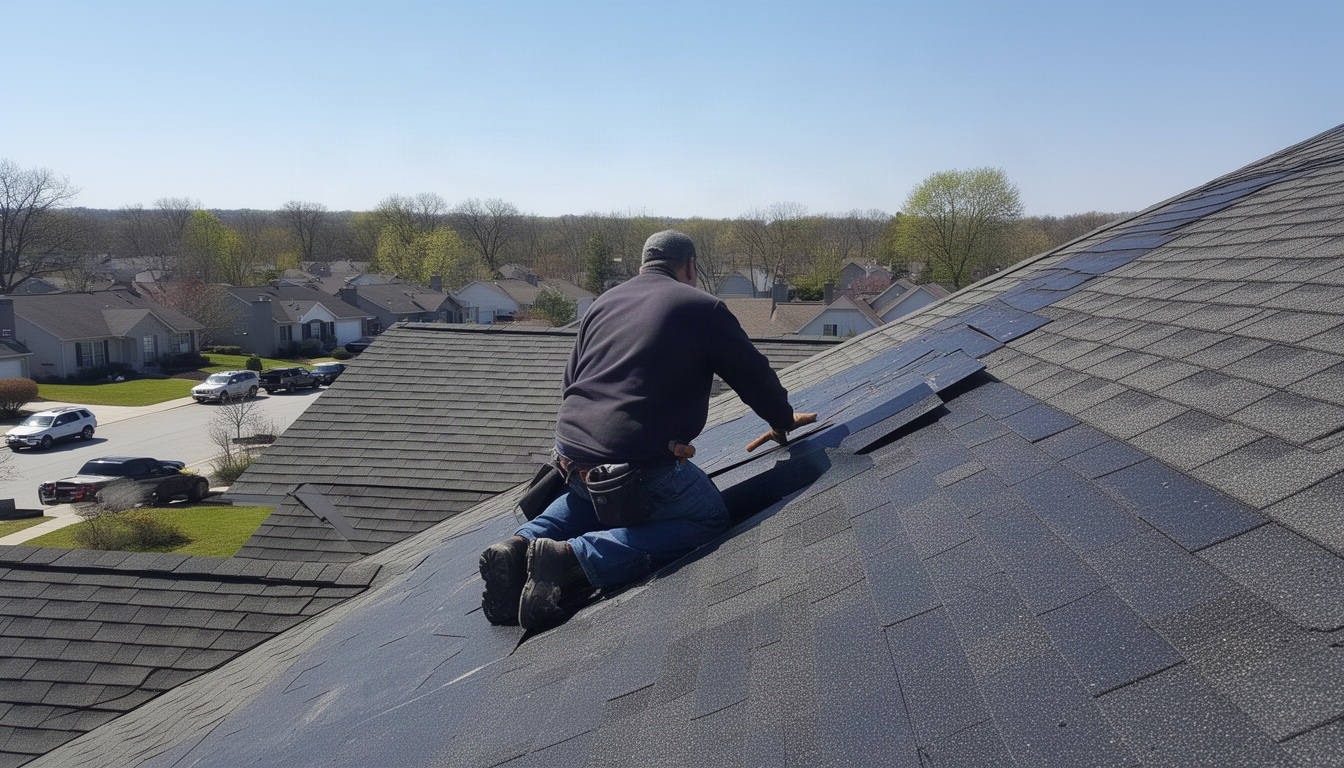
You're running a roofing crew. Calls come in during the day while you're on a roof. Your office person is juggling quotes, follow-ups, and scheduling. Half your leads go cold because nobody picks up the phone fast enough. And you're wondering if AI can actually fix any of this, or if it's just hype. (Faa.gov)
Here's the straight answer: AI for roofers works best on the boring stuff - the admin work that's quietly costing you jobs and hours. It won't replace your estimator or your crew. But it can answer calls when you can't, get quotes out faster, and follow up with leads you'd otherwise forget about. The question isn't whether AI works. It's whether the specific tools are worth it for your business.
In This Article
- What Does AI Actually Do for Roofers?
- Which AI Tools Are Roofers Actually Using in 2026?
- How Much Does AI Cost Roofing Contractors?
- Where Does AI Move the Needle Most for Roofers?
- How to Start Using AI in Your Roofing Business (Step by Step)
- Frequently Asked Questions About AI for Roofers
- The Real ROI: One Job Covers a Year
What Does AI Actually Do for Roofers?
AI in roofing isn't magic. It's software that handles repetitive tasks faster than a person can, and sometimes smarter. Here are the four places it actually helps:
Lead response. A prospect calls while you're on a job. Instead of going to voicemail, an AI system texts them back within minutes, asks a few qualifying questions, and drops their info into your CRM. That fast response is the difference between a lead that stays warm and one that calls your competitor.
Estimating speed. You used to spend a couple of hours measuring a roof with a tape and ladder. Now you upload photos to an AI measurement tool and get square footage, pitch, and material estimates in a fraction of the time. You still review it - AI doesn't replace your judgment - but you're not burning half a day on the measuring part.
Follow-up automation. You send out dozens of quotes a month. Most don't close on the first touch. AI can send a text or email sequence to the ones that went quiet: "Hey, just checking in on that estimate. Any questions?" It's not pushy. It's just making sure you're not leaving money on the table because you forgot to follow up.
Storm lead triggers. When hail hits your area, AI tools pull a list of addresses in the damage path and send them a message: "We're in your neighborhood after the storm. Learn more about our free inspection." You're reaching out to a couple hundred homeowners in an hour instead of knocking on doors for a week.
What AI can't do: It won't assess structural damage or safety issues. It won't replace your crew or your estimator's eye. It won't close a deal on its own. AI works best when it's doing the work behind the scenes, not in front of your customer.
Practical AI applications in roofing extend to automating paperwork so invoices don't slip through the cracks, keeping tight job reports to track materials and expenses, and monitoring job progress to make sure work stays on schedule.
If you're a solo operator with no real admin bottleneck, you probably don't need a full AI stack yet. But if you're running multiple crews and losing leads to voicemail or slow follow-up, this is worth your attention.
Which AI Tools Are Roofers Actually Using in 2026?
AI Lead Response and CRM Tools
JobNimbus is the most popular roofing CRM. It includes automated text and email follow-up sequences, lead scoring, and pipeline tracking. According to Roof Flow AI, JobNimbus pricing starts at $225 per month for the base plan, with a three-layer model of base CRM fee, per-user charges, and add-on costs that can drive real bills to $500–$600 monthly for a five-person team and past $1,200 for ten users.,
AccuLynx is another roofing-specific CRM with strong production scheduling and job costing built in. It's heavier on the production side than JobNimbus, so if you're managing crews in the field, this one tends to shine.
Jobber is the budget option. It's not roofing-specific, but it works well enough, starting at $49 per month for basic scheduling and automation.
GoHighLevel is the platform many white-label AI answering services run on. You can set it up yourself or hire a contractor to white-label it for you.
For missed-call text-back specifically - probably the single highest-ROI entry point for most roofers - tools like Hatch and Loom Network are worth a look. They catch calls that go to voicemail and fire off an automated text: "Hey, we missed your call. Text us back or call again." One extra job pays for a year of the tool.
AI Estimating and Measurement Software
EagleView uses satellite imagery to measure roofs with impressive accuracy. According to AI Roofing Software: What's Real vs. Hype, EagleView's roof-line measurements tested 98.77% accurate in a 2025 LiDAR benchmark, and a remote aerial report costs roughly $13 to $87 versus approximately $300 for an in-person evaluation when you factor in drive time, labor and ladder risk.,
Hover is the smartphone alternative. You take photos from the ground, and their 3D software generates measurements. It's cheaper per report, but accuracy can vary depending on photo quality and roof complexity. Contractors say it works well on simple pitched roofs and struggles a bit on complex shapes.
Roofr combines AI measurement with a full estimating platform. It's a good option if you want the whole workflow in one place.
GAF QuickMeasure is free if you're already using GAF materials. It's not as detailed as EagleView, but for a contractor already locked into GAF, it's a no-brainer.
Drone and AI Inspection Tools
If you're doing insurance restoration work, drone inspections are becoming table stakes. You'll need an FAA Part 107 certification to fly commercially - it's a modest test fee and a few hours of study. Then you need a drone and software to process the images.
DJI Zenmuse drones with thermal imaging are the most common choice. Skydio makes autonomous drones that are easier to fly if you're new to it.
AI tools like Pix4D or DroneDeploy stitch images together, generate 3D models, and measure damage. A drone inspection takes around 30 minutes instead of a couple of hours on a ladder, and you get much better documentation for insurance claims.
How Much Does AI Cost Roofing Contractors?
Entry level: A missed-call text-back tool or a basic CRM - think under $150 a month to get started.
Mid-tier: A roofing CRM like JobNimbus or AccuLynx paired with a measurement tool like Hover lands you somewhere in the $150–$400 per month range.
Full stack: AI lead response, AI estimating software, CRM automation, and a storm trigger tool combined can run $400–$900 per month.
Here's the math that matters: a typical roofing job is worth a meaningful chunk of revenue. If an AI tool helps you close even one extra job per quarter, the tool pays for itself many times over. The stack costs a fraction of what that single job brings in.
The thing to watch is per-report costs on satellite measurement tools. If you're running a high volume of jobs, those per-report fees can quietly become your biggest line item. Hover or Roofr might make more sense at that scale.
If you want to model the numbers for your specific business before committing, the Roofing Training Cost Comparison and ROI Guide lets you input your annual hires, average deal value, and deals per rep to see your exact savings in real time.
Where Does AI Move the Needle Most for Roofers?
Speed to lead response. According to AI Roofing Software: What's Real vs. Hype, the majority of customers buy from the company that responds first, and responding within minutes dramatically increases your chances of qualifying a lead. If you're losing leads to slow response time, this is your biggest opportunity.
Missed call recovery. Most people who call a business and hit voicemail won't call back. According to AI for Roofers: The 2026 Contractor Playbook, industry data across the home services trades consistently shows that a large share of inbound calls to contractors go unanswered during working hours, and that the majority of callers who hit voicemail never call back. If AI recovers even a handful of those missed calls each month and turns them into jobs, the tool pays for itself quickly.
Estimate speed and accuracy. Measuring a roof manually takes a couple of hours. An AI tool does it in 15 minutes. Multiply that across dozens of jobs a month and you're getting a lot of time back.
Storm chasing automation. When hail hits your area, AI tools like HailTrace pull a list of affected addresses and trigger an automated outreach sequence. According to AI for Roofers: The 2026 Contractor Playbook, a hailstorm or hurricane does not increase your demand by ten percent. It multiplies it. In storm-prone markets, insurance restoration can make up a huge portion of your annual revenue. Being first to the door matters.
Follow-up sequences. Automated follow-up sequences recover quotes that would have otherwise gone cold. On a healthy volume of quotes per month, even a modest recovery rate means several extra jobs from leads you already had.
How to Start Using AI in Your Roofing Business (Step by Step)
Step 1: Identify your biggest leak. Where are you losing money and time right now? Calls going to voicemail? Estimates taking too long? Quotes going out with no follow-up? Storm season and you're not reaching enough homeowners? Pick one.
Step 2: Pick one tool to fix that leak.
- Missed calls? Start with a missed-call text-back tool.
- Slow estimates? Start with Hover or Roofr.
- No follow-up? Start with JobNimbus or a basic CRM.
- Storm leads? Start with HailTrace.
Step 3: Set a 60-day test with a clear metric. Track something specific - missed calls recovered, estimates sent per week, quotes followed up on. Measure before and after. That's your ROI.
Step 4: Calculate cost per lead and cost per job. If you're spending a modest monthly fee on a missed-call tool and recovering several leads per month, your cost per lead is surprisingly low. If a good portion of those convert to jobs, your cost per job is even lower.
Step 5: Avoid stacking tools before the first one works. This is the mistake most contractors make. Pick one. Master it. Then add the next.
Integration note: Most roofing CRMs - JobNimbus, AccuLynx, Jobber - integrate with measurement tools and text-back systems. Just confirm before you buy. For the follow-up and nurture side of the stack, email marketing tools can layer in AI-driven campaigns once your core CRM is running smoothly.
Frequently Asked Questions About AI for Roofers
How much does AI software cost for a roofing company?
Entry-level tools start under $150 per month. A full stack can run $400–$900 per month. Most contractors start with one tool and add others as they prove ROI. Just keep an eye on per-report fees on satellite measurement tools - at high job volumes, those fees can add up to a significant monthly cost on their own.
Can AI replace a roofing estimator?
No. AI can measure a roof and generate a quote template in minutes instead of hours. But your estimator still needs to review it, adjust for complexity, factor in local labor costs, and make the final call on pricing. AI speeds up the process. It doesn't replace judgment.
How does AI help roofers respond to storm leads faster?
Tools like HailTrace pull a list of addresses affected by hail or wind events within hours of the storm. You can trigger an automated text or email outreach sequence to hundreds of homeowners in an hour - reaching people while they're still actively looking for a roofer, instead of knocking on doors a week later.
Is AI worth it for a small roofing company with one crew?
Probably not yet. If you're a solo operator or running one crew, you're likely not losing enough leads or spending enough time on admin to justify the cost. If you're running two or three crews and doing solid revenue, AI is worth a 60-day test. The break-even is simple: if one extra job per quarter pays for the tool, it's worth it.
How do I know if an AI tool is actually improving my close rate?
Track three numbers before and after: leads responded to quickly, quotes sent per week, and close rate on quotes. Most contractors see results in 30–60 days if they're using the tool consistently. If nothing moves after 60 days, stop paying for it and try something else.
The Real ROI: One Job Covers a Year
You don't need AI to be perfect. You just need it to recover one extra job per quarter. One good job covers a year of most tools. Two jobs and you're well ahead.
Start with one tool. Test it for 60 days. Measure the result. Then add the next one.
I can help you set this up and connect the tools so they work together without extra work on your end. You're not buying AI to be trendy. You're buying it to win more jobs and stop wasting time on admin. If it does that, it pays for itself. If it doesn't, you stop paying for it and try something else.
That's the honest take.