HVAC Truck Stock List: What to Carry in 2026
A practical HVAC truck stock list covering parts, tools, and seasonal items. Includes a printable checklist and inventory tips for service techs.
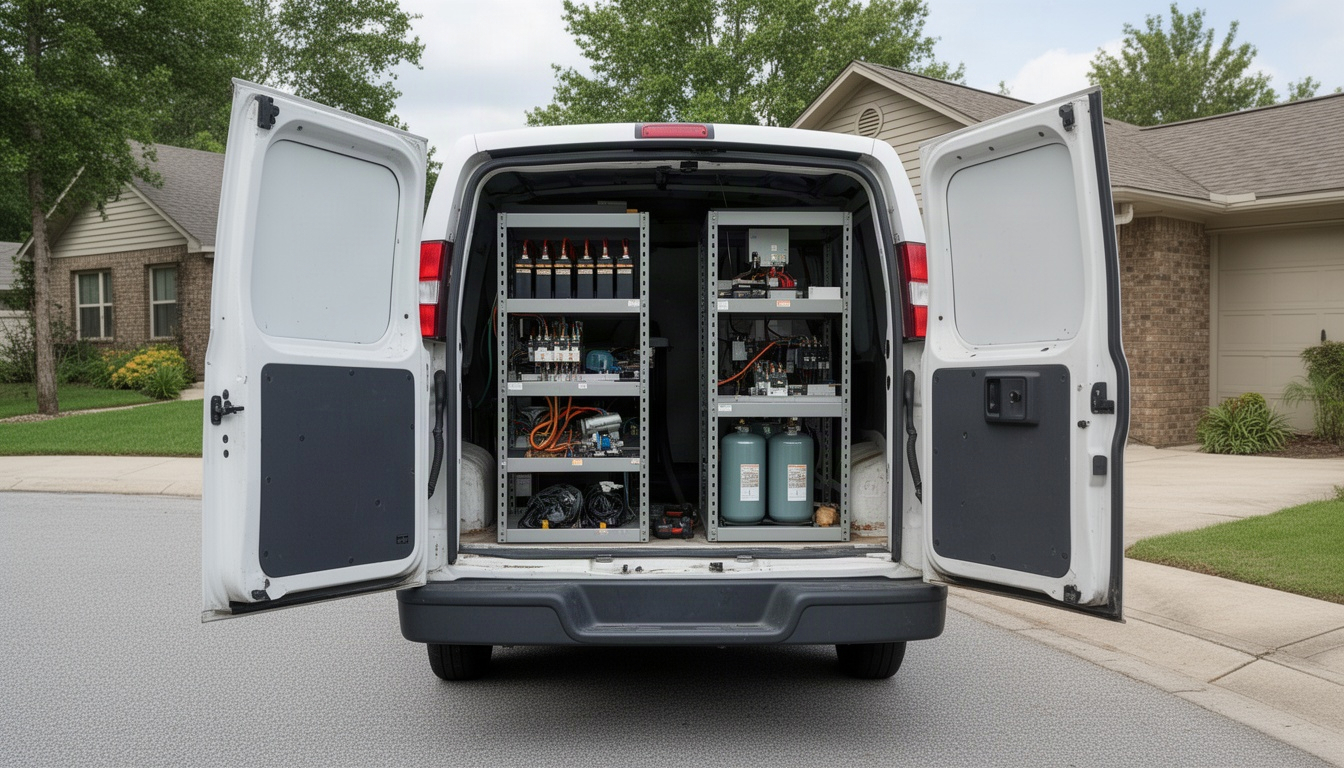
You're halfway through a Tuesday morning when a customer calls. (Epa.gov) The compressor won't kick on. You diagnose it in ten minutes: a blown run capacitor. But you don't have one in the truck. So you spend the next two hours driving to the supply house, waiting in line, and driving back. The customer's frustrated. You've burned a half day on a part that costs less than lunch.
That's the real cost of an under-stocked HVAC truck. Not just the wasted time, but the jobs you can't finish, the callbacks you have to schedule, and the reputation damage when you're the tech who couldn't get it done today.
A solid HVAC truck stock list changes that. It's not about carrying everything - it's about carrying the right things. The parts that fail most often. The tools that let you diagnose and fix on the first visit. The seasonal items that shift with the weather.
In This Article
- What Should Be on an HVAC Truck Stock List?
- Core Parts Every HVAC Truck Should Carry Year-Round
- How Does Your Truck Stock List Change by Season?
- Tools and Equipment to Keep on Every Service Truck
- How Do You Manage and Restock HVAC Truck Inventory?
- Printable HVAC Truck Stock Checklist (Cooling and Heating Versions)
- Frequently Asked Questions About HVAC Truck Stock
- The Real Win: Finishing Jobs on the First Visit
What Should Be on an HVAC Truck Stock List?
An HVAC truck stock list is your mobile parts warehouse. It breaks down into four core categories: electrical and control parts, refrigerant and line set supplies, drain and plumbing consumables, and tools.
The goal is simple: show up and finish the job. A well-stocked truck means you're closing calls on the first visit instead of scheduling a return trip. That difference adds up fast - in customer satisfaction, in your own sanity, and in the number of jobs you can actually complete in a week.
Standardizing your truck stock also matters when you're adding technicians. If every truck carries the same core inventory, your dispatcher knows what each tech can handle. You avoid the chaos of one truck being loaded and another being bare.
The key is seasonal rotation. What you carry in July isn't what you carry in January. Cooling season adds TXVs and hard-start kits. Heating season adds igniters and flame sensors.
Core Parts Every HVAC Truck Should Carry Year-Round
Electrical and Controls
Capacitors and contactors are the highest-frequency failure items in residential HVAC. You need both on every truck.
| Part | Recommended Qty |
|---|---|
| Run capacitors (5–10 MFD) | 8 across ratings |
| Run capacitors (35–55 MFD) | 8 across ratings |
| Contactors (24V, single-pole) | 3 |
| Contactors (240V, double-pole) | 3 |
| Relays (24V) | 4 |
| Fuses (various amp ratings) | 20 mixed |
| Disconnect blocks | 2 |
| Thermostats (basic digital) | 2 |
Stocking run capacitors across common MFD ratings - think 5, 7.5, 10, 35, 40, 45, 50, 55 - isn't a huge investment, but it eliminates same-day parts runs on the most common AC failure you'll see. Capacitors are the most common failure point in HVAC systems, according to industry sources. If you service mostly Carrier and Lennox, stock the MFD ratings those units use most. Brand-agnostic capacitors work fine for most calls, but OEM parts reduce callbacks on warranty work.
Refrigerant and Line Set Supplies
This is where 2026 gets interesting. R-410A production is being phased down under EPA rules that took effect January 1, 2025. R-454B (Puron Advance) is the primary replacement for new equipment. But existing R-410A systems will need R-410A for years to come. You need both on your truck.
| Item | Recommended Qty | Notes |
|---|---|---|
| R-410A (30 lb cylinder) | 1–2 | For existing equipment service |
| R-454B (30 lb cylinder) | 1 | For new equipment and conversions |
| Schrader valve cores | 20 mixed | 1/4" and 5/16" sizes |
| Schrader caps | 30 | Prevent contamination |
| Flare fittings (assorted) | 20 | 1/4", 3/8", 1/2" sizes |
| Sealant tape (PTFE) | 3 rolls | For threaded connections |
| Vacuum pump oil | 1 quart | Mineral or synthetic per your pump |
A2L refrigerants like R-454B require A2L-rated recovery machines and updated safety protocols. If you're not already set up for A2L work, budget for equipment upgrades before the busy season hits.
Drain and Plumbing Consumables
Clogged condensate drains are among the most common, preventable HVAC callbacks. Stock these year-round:
- PVC fittings (1.5" and 2" elbows, tees, couplings): 10 each
- Condensate drain tablets: 2 boxes
- Drain pan treatment: 1 bottle
- Wet/dry vac attachments: 2 (for drain clearing)
- PVC primer and cement: 1 each
- Duct tape and foil tape: 2 rolls each
These items are cheap and light, and they prevent hours of callbacks.
How Does Your Truck Stock List Change by Season?
Cooling Season (May–September)
Add these to your core stock:
- TXVs (thermostatic expansion valves): 3–5 in common sizes.
- Hard-start kits: 4–6 units. A hard-start kit - potential relay plus start capacitor - extends compressor life and is a natural upsell conversation.
- Condenser coil cleaner: 2 bottles.
- Additional run capacitors: Bump your stock from 8 to 12–15 across all MFD ratings. Cooling season failure rates climb, and you'll burn through capacitors fast.
Heating Season (October–April)
Pull the cooling-specific items. Add these:
- Hot surface igniters: 10–15 units (universal plus OEM common models). Igniter failure is the number one no-heat call. Stocking up before October means you're not paying emergency shipping on every cold snap.
- Flame sensors: 6–8 units.
- Pressure switches: 4–6 units (high-limit and low-pressure).
- Gas valves: 2–3 in common configurations.
- Thermocouples: 4–6 units.
- Limit switches: 4–6 units.
The transition happens in late September and early April. Pull heating parts off the truck before cooling season ramps up. Add them back before the first cold snap - not after.
Tools and Equipment to Keep on Every Service Truck
Diagnostic tools:
- Manifold gauges (analog or digital). Digital is faster and logs data to your phone.
- Refrigerant scale. Essential for accurate charging.
- Digital multimeter. Non-negotiable for electrical troubleshooting.
- Clamp meter. Measures amp draw without breaking circuits.
- Combustion analyzer (for heating trucks). Measures flue gas and CO.
Hand tools:
- Assorted drill bits (1/16" to 1/2")
- Sheet metal screws (assorted gauges and lengths)
- Duct tape and foil tape
- Zip ties (multiple sizes)
- Vacuum pump (for evacuation before charging)
- Nut drivers and socket sets
- Adjustable wrench and pipe wrench
- Flashlight and headlamp
Safety and recovery:
- Refrigerant recovery machine (A2L-rated if you're handling R-454B). This is legally required under EPA Section 608 regulations.
- Safety glasses and work gloves
- CO detector (for heating work)
- First aid kit
How Do You Manage and Restock HVAC Truck Inventory?
Most small HVAC shops use one of two approaches: manual count sheets or software.
Manual approach: Every Friday, each tech counts their truck and emails or texts a list to the office. The warehouse pulls parts on Monday and restocks the truck. It works, but it's slow and prone to errors, and you can't easily track which parts were used on which jobs.
Software approach: Inventory management software offers truck stock modules where techs log parts used per job from their phone. The system tracks stock levels per truck and triggers automatic reorder alerts when minimums are hit. For a small shop, that kind of visibility pays for itself quickly by cutting down on emergency parts runs and dead stock sitting on shelves.
The best approach is a min/max system. You set a minimum quantity for each part (the reorder point) and a maximum (the ceiling). When stock hits the minimum, you order. When it hits the maximum, you stop buying.
Example: You set a minimum of 5 run capacitors (5 MFD) and a maximum of 10. When you hit 5, you order 5 more. You never go below 5, and you never carry more than 10. Simple, and it keeps cash from getting tied up in parts you don't need yet.
A well-optimized truck stock is a meaningful investment, but it's one that pays back every time you close a job on the first visit instead of chasing parts across town.
Printable HVAC Truck Stock Checklist (Cooling and Heating Versions)
Cooling Season Checklist
Electrical & Controls
- Run capacitors (5–10 MFD): _____ qty
- Run capacitors (35–55 MFD): _____ qty
- Contactors (24V): _____ qty
- Contactors (240V): _____ qty
- Relays (24V): _____ qty
- Fuses (assorted): _____ qty
- Disconnect blocks: _____ qty
- Thermostats: _____ qty
Refrigerant & Line Sets
- R-410A (30 lb): _____ qty
- Schrader valve cores: _____ qty
- Schrader caps: _____ qty
- Flare fittings: _____ qty
- PTFE tape: _____ qty
Cooling-Specific
- TXVs: _____ qty
- Hard-start kits: _____ qty
- Condenser coil cleaner: _____ qty
Drain & Plumbing
- PVC fittings: _____ qty
- Condensate tablets: _____ qty
- Drain pan treatment: _____ qty
- Wet/dry vac attachments: _____ qty
Tools
- Manifold gauges
- Refrigerant scale
- Digital multimeter
- Clamp meter
- Vacuum pump
- Recovery machine
- Safety glasses & gloves
Heating Season Checklist
Electrical & Controls
- Run capacitors (5–10 MFD): _____ qty
- Contactors (24V): _____ qty
- Relays (24V): _____ qty
- Fuses (assorted): _____ qty
- Disconnect blocks: _____ qty
- Thermostats: _____ qty
Refrigerant & Line Sets
- R-410A (30 lb): _____ qty
- Schrader valve cores: _____ qty
- PTFE tape: _____ qty
Heating-Specific
- Hot surface igniters (universal): _____ qty
- Hot surface igniters (OEM models): _____ qty
- Flame sensors: _____ qty
- Pressure switches (high-limit): _____ qty
- Pressure switches (low-pressure): _____ qty
- Gas valves: _____ qty
- Thermocouples: _____ qty
- Limit switches: _____ qty
Drain & Plumbing
- PVC fittings: _____ qty
- Condensate tablets: _____ qty
- Drain pan treatment: _____ qty
Tools
- Manifold gauges
- Refrigerant scale
- Digital multimeter
- Clamp meter
- Combustion analyzer
- Vacuum pump
- Recovery machine
- Safety glasses & gloves
- CO detector
Customize these lists based on your top 20 equipment models. If you service mostly Carrier units, add the specific capacitor MFD ratings Carrier uses. If you're in a market with older equipment, adjust your igniter and sensor stock accordingly.
Frequently Asked Questions About HVAC Truck Stock
How much does it cost to fully stock an HVAC service truck?
It depends a lot on what you already own. If you're starting from scratch with diagnostic equipment and a recovery machine, you're looking at a meaningful upfront investment - tools alone can run several thousand dollars. If you already have your tools sorted, the parts side of things is much more manageable. Core electrical parts, refrigerant supplies, and drain consumables together are well within reach for most shops, and the cost comes back quickly when you stop making emergency supply house runs.
What is the difference between truck stock and warehouse inventory for HVAC?
Truck stock is the parts you carry on your service vehicle for immediate use; warehouse inventory is the backup supply at your office or shop. Truck stock is optimized for speed and first-call completion - high-turnover items in quantities that fit your truck. When a tech runs low, they restock from the warehouse; when the warehouse runs low, you order from your distributor.
How often should HVAC technicians restock their truck inventory?
Most techs should restock once a week, typically on Friday or at the end of their shift. If you're using inventory management software, you can trigger restocking alerts automatically when stock hits minimums, which is more efficient than a manual weekly count.
What parts do HVAC techs run out of most often?
Run capacitors, contactors, and igniters are the top three - and also the parts that fail most frequently. Stock these aggressively and you'll handle the majority of common failures on the first visit. Flame sensors, pressure switches, and drain-related items round out the list.
What refrigerants should be on an HVAC truck in 2026?
You need both R-410A and R-454B (Puron Advance) - R-410A for existing equipment, R-454B for new systems and conversions. R-454B is mildly flammable (A2L classification) and requires an A2L-rated recovery machine. If your recovery machine is older, budget for an upgrade before it becomes a problem mid-season.
How do you build a truck stock list for a new HVAC technician?
Start with the core year-round parts - capacitors, contactors, relays, fuses, basic refrigerant, drain supplies - then add seasonal items based on the current season. Customize based on the equipment models your shop services most. Give new techs a list of your top 20 equipment models and the specific parts those units use most. That's the difference between a generic truck stock and one that actually works for your business.
The Real Win: Finishing Jobs on the First Visit
An HVAC truck stock list isn't just a parts list. It's a commitment to showing up prepared. The gap between a well-stocked truck and an under-stocked one shows up every single day - in jobs completed, callbacks avoided, and customers who actually recommend you to their neighbors.
Start with the core parts: capacitors, contactors, igniters, flame sensors, and drain supplies. Add seasonal items before each season shifts. Use a min/max system to keep inventory lean and cash flowing. Audit your truck weekly.
LocalRestart helps you build each truck's restock list based on the actual jobs it's running, so the right parts are on board before your tech rolls out the door. The investment is small. The payoff is real.