Landscaping Estimate Template: Build One That Wins Jobs (2026)
Create a landscaping estimate template that closes more jobs. Includes line-item breakdowns, labor formulas, and a free downloadable format. Updated 2026.
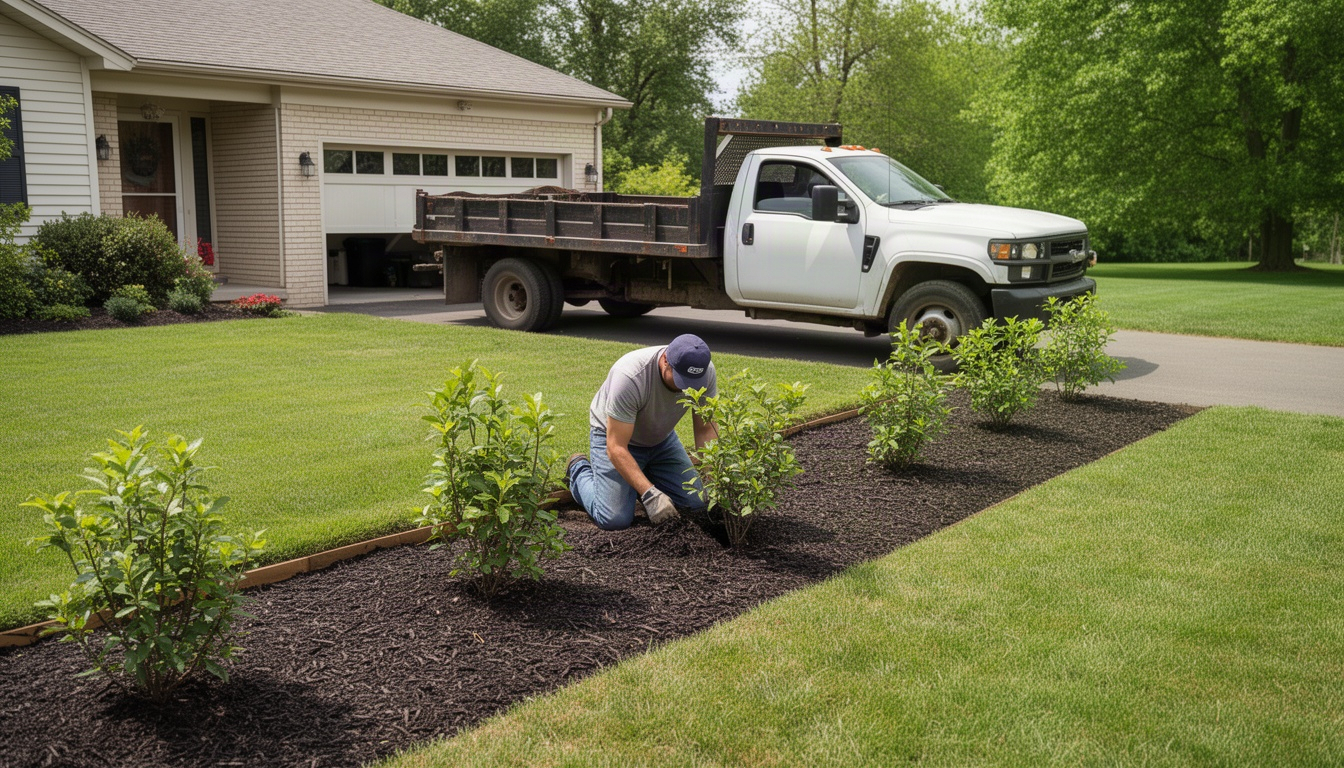
You're standing at a job site with your phone in your hand. (Bls.gov) The homeowner wants a price on a patio install, mulch beds, and new shrubs. You know the work cold. You know what it costs. But when you send that estimate three days later, it looks like every other contractor's - and the client picks someone else.
Here's the thing: most landscaping estimate templates are just blank forms. They don't show you how to fill them in so you actually make money. They don't explain the math behind labor costs, material markup, or overhead recovery. And they definitely don't help you close more jobs.
This guide walks you through building a landscaping estimate template that works - with real formulas and real examples you can use today.
In This Article
- What Should a Landscaping Estimate Template Include?
- How Do You Calculate Labor Costs for a Landscaping Estimate?
- Material Markup and Equipment: What to Add to Your Estimate
- Free Landscaping Estimate Template: Walkthrough and Download
- How to Price Different Landscaping Jobs With the Same Template
- Common Mistakes Landscapers Make on Estimates
- FAQ: Landscaping Estimate Template Questions
- The Real Shortcut: From Voice Note to Estimate
- Wrap-Up
What Should a Landscaping Estimate Template Include?
A solid landscaping estimate template needs to look professional and capture all the costs that actually matter. Too many contractors skip line items and end up eating costs they forgot to price.
Here's what belongs on every estimate:
Header section. Your company name, license number (if required in your state), estimate number, date, and expiration date. That expiration date matters - material prices swing seasonally, and you don't want to honor a price from two months ago when mulch costs jumped.
Client info. Name, phone, email, and the job site address. If the site address is different from their mailing address, list both.
Line-item table. Columns should be: Description, Quantity, Unit, Unit Price, and Total. Each line is one material or labor task. Don't lump everything into one number - that's how you lose negotiation power and hide profit leaks.
Labor section. Break out labor separately from materials. Show hours and hourly rate, or at least a total labor cost.
Materials and equipment. List each material with quantity and unit price. Add a line for delivery fees, dump fees, or other direct costs.
Subtotal, markup, tax, and total. Subtotal your materials. Add your material markup - typically somewhere in the 15–30% range for landscaping. Calculate sales tax on materials (rules vary by state, so check yours). Then show the grand total.
Payment terms and signature block. State your deposit requirement, your payment schedule, and when the estimate expires.
Why itemize instead of lump-sum? Itemized estimates build trust, but they also give clients more surface area to negotiate. The fix is to show line items but not unit prices - show the total for each task, not the per-unit cost. That way you're transparent without inviting line-by-line haggling.
How Do You Calculate Labor Costs for a Landscaping Estimate?
This is where most contractors leave money on the table. They use their base hourly wage and forget to add the burden rate - payroll taxes, workers' comp, insurance, and other costs on top of what you actually pay your crew.
Here's the formula:
(Hourly wage × burden rate multiplier) × estimated hours = total labor cost
Say you have a two-person crew. Each person makes an hourly wage. Your burden rate is 20%. The job is a six-hour mulch and planting install.
- Crew cost per hour: $22 × 1.20 (burden) × 2 people = $52.80/hour
- Total labor for 6 hours: $52.80 × 6 = $316.80
If you'd just used the base wage times two times six hours, you'd come up short on that job alone - and that gap compounds across every job you run.
What's a realistic burden rate? Most small landscaping crews land somewhere between 18–25%. Start at 20% and track your actual payroll taxes and insurance for a few months to dial it in.
Common landscaping tasks and time estimates:
- Sod installation: 0.5–1 hour per 1,000 sq ft
- Mulch spreading: 1–2 hours per 10 cubic yards
- Shrub planting: 0.5–1 hour per plant (including hole digging)
- Lawn edging: 1–2 hours per 100 linear feet
- Paver patio: 2–4 hours per 100 sq ft
- Hardscape removal: 1–3 hours per 100 sq ft
Track your actual times on a few jobs and adjust. Also budget for drive time and site cleanup - don't assume cleanup takes 15 minutes. Budget 30–45 minutes to haul debris, rake, and sweep.
Material Markup and Equipment: What to Add to Your Estimate
Markup is what you add to your cost. Margin is your profit as a percentage of what the client pays. They are not the same thing.
Say you buy $340 in mulch and plants and mark it up 25%.
- Markup: $340 × 0.25 = $85
- Client price: $340 + $85 = $425
- Your gross margin: $85 ÷ $425 = 20% (not 25%)
That gap matters. If you think a 25% markup gives you a 25% margin, you're underpricing across your whole business.
Standard material markup ranges for landscaping run 15–30%. Most contractors settle around 20–25%. The markup covers your overhead, waste, and profit.
Equipment cost recovery. Use this formula:
(Annual equipment cost ÷ annual billable hours) = hourly equipment rate
Example: A skid steer with a five-year useful life, plus annual maintenance and insurance costs.
- Add up your total annual cost (purchase price spread over useful life, plus maintenance, plus insurance)
- Divide by your billable hours per year to get an hourly rate
Add that hourly rate to every estimate where you use that machine. If you don't charge for it, you're slowly going broke.
Commonly forgotten line items:
- Delivery fees (plants, mulch, pavers)
- Dump or disposal fees
- Permit costs (irrigation installs, hardscape in some jurisdictions)
- Fuel surcharge
- Site cleanup and haul-away
Each of these can quietly eat into your job margin if you miss them.
Free Landscaping Estimate Template: Walkthrough and Download
Here's what a real landscaping estimate looks like, filled in with actual numbers.
Header:
LANDSCAPING ESTIMATE

Your Company Name | License #12345
Estimate #2026-047 | Date: November 15, 2026 | Valid Until: December 15, 2026
Client Info:
Client: Sarah Martinez
Phone: (555) 234-5678 | Email: sarah@email.com
Job Site: 1247 Oak Ridge Drive, Springfield, IL 62701
Line Items (Sample Patio + Planting Job):
| Description | Qty | Unit | Unit Price | Total |
|---|---|---|---|---|
| Paver patio installation (200 sq ft) | 200 | sq ft | $18.00 | $3,600.00 |
| Paver materials (base, sand, pavers) | 200 | sq ft | $12.00 | $2,400.00 |
| Mulch (5 cubic yards) | 5 | cu yd | $45.00 | $225.00 |
| Shrub planting (8 plants, 3–5 gal) | 8 | ea | $35.00 | $280.00 |
| Delivery and site cleanup | 1 | job | $150.00 | $150.00 |
| Materials Subtotal | $3,055.00 | |||
| Materials Markup (25%) | $763.75 | |||
| Labor (12 hours @ $52.80/hr) | 12 | hrs | $52.80 | $633.60 |
| Subtotal | $4,452.35 | |||
| Sales Tax | $278.27 | |||
| Grand Total | $4,730.62 |
Payment Terms:
- 50% deposit due upon acceptance ($2,365.31)
- 50% balance due upon completion
- Estimate valid for 30 days
Scope of Work:
This estimate includes patio installation with proper base prep, mulch application, and shrub planting as shown. Does not include: removal of existing hardscape, grading, irrigation, or changes to the scope outlined above. Any additional work will be quoted separately.
Format choice: Word vs. Excel vs. PDF
- Word: Easy to customize, looks professional, but harder to do math automatically. Good if you're sending a handful of estimates per month.
- Excel: Formulas do the math for you and reduce errors. Worth switching to once you're sending estimates regularly.
- PDF: Looks locked-in and professional, but you have to regenerate it each time. Best for final versions you're emailing.
How to Price Different Landscaping Jobs With the Same Template
Lawn maintenance estimate (recurring mowing):
| Description | Qty | Unit | Unit Price | Total |
|---|---|---|---|---|
| Lawn mowing (3,500 sq ft) | 3,500 | sq ft | $0.012 | $42.00 |
| Edging and blowing | 1 | job | $15.00 | $15.00 |
| Per-Visit Total | $57.00 | |||
| Weekly service (April–October, 26 weeks) | 26 | wks | $57.00 | $1,482.00 |
Irrigation system installation - don't forget the permit line. Permit costs vary quite a bit depending on system size and your jurisdiction, so look it up before you estimate.
| Description | Qty | Unit | Unit Price | Total |
|---|---|---|---|---|
| Irrigation system design and materials | 1 | job | $1,200.00 | $1,200.00 |
| Installation labor (16 hours) | 16 | hrs | $52.80 | $844.80 |
| Permit and inspection | 1 | job | $150.00 | $150.00 |
| Total | $2,194.80 |
Typical gross margin targets by job type:
- Maintenance (mowing, edging, blowing): 40–55%
- Installation (planting, mulch, beds): 30–45%
- Hardscape (patios, walls, edging): 25–40%
For hardscape, add a line for subcontractor coordination. If you're hiring a mason, add their cost as a line item, then add 10–15% for your coordination time and overhead.
Common Mistakes Landscapers Make on Estimates
No expiration date. Material prices shift seasonally. Standard practice is 14–30 days - pick one and stick to it.
Lumping labor and materials into one line. "Patio installation: $5,000" gives clients nothing to evaluate and nothing for you to defend. Always separate labor and materials.
Skipping scope-of-work language. Scope creep happens because the estimate didn't say what was and wasn't included. Write it out: "Includes: patio installation with base prep, sand, and pavers. Does not include: removal of existing hardscape, grading, or irrigation work."
Forgetting sales tax on materials. In most states, landscaping materials are subject to sales tax. Some states exempt labor; some tax the full contract. Check your state's rules before you send anything.
No payment schedule for larger jobs. Requiring a deposit upfront is standard practice. Spell it out on the estimate so there's no awkward conversation later.
Not tracking actual vs. estimated costs. You estimate 12 hours; the job takes 14. Start tracking actual hours against estimates. After a dozen or so jobs, you'll see patterns and adjust. That's how you get profitable.
FAQ: Landscaping Estimate Template Questions
How much should I charge per hour on a landscaping estimate?
Use your base wage plus a burden rate - typically 20–25% - to get your fully-loaded labor cost. Calculate your actual burden rate by dividing total payroll taxes and insurance by total wages over a few months, then multiply your base wage by that factor. That's the number that belongs on your estimate.
What is the difference between a landscaping estimate and a quote?
An estimate is a good-faith approximation and generally non-binding. A quote (or fixed-price proposal) is typically a binding offer once accepted. Call it an "estimate" if the price might change based on site conditions, and a "quote" if it's fixed. Either way, always include an expiration date and scope-of-work language to avoid disputes.
Should I use Word, Excel, or PDF for my landscaping estimate template?
Start with Word if you're sending a small number of estimates each month. Move to Excel once you're sending them regularly - formulas calculate totals automatically, saving time and reducing errors. Use PDF for final versions you're emailing to clients.
What markup percentage do landscapers typically add to materials?
Somewhere in the 15–30% range is standard, with most contractors landing around 20–25%. Just remember: a 25% markup on your material cost gives you a 20% margin on the sale price - not 25%. Don't confuse the two or you'll underprice yourself.
When should I move from a template to landscaping estimate software?
When you're sending a steady stream of estimates every month or managing recurring accounts with changing pricing. Software automates labor calculations, material pricing, and tax, and tracks actual vs. estimated costs. For many contractors, though, a well-built template handles the job just fine for a long time.
The Real Shortcut: From Voice Note to Estimate
Building a template and filling it in manually works - but it takes a real chunk of time per job. If you're sending a lot of estimates every month, that office time adds up fast.
Instead of building estimates manually, you can record a one-minute voice note at the job site - describe the work, the materials, the scope - and have a professional estimate ready to review and send within an hour. LocalRestart turns your voice note and photos into a line-item estimate with labor, materials, markup, and tax already calculated. You check it, adjust if needed, and send it.
Wrap-Up
A good landscaping estimate template looks professional, captures all your costs, and protects you from scope creep and pricing disputes.
Start with the template structure in this guide. Fill in your labor rates (base wage × 1.20 for burden), your material markup (20–25%), and your equipment recovery costs. Separate labor from materials. Add a scope-of-work statement. Include an expiration date.
Then track your actual hours against estimates. After ten or fifteen jobs, you'll see where you're consistently underestimating. Adjust. That's how you get profitable.