Roofing Estimate Template: Free Download (2026)
See every section a roofing estimate template needs, from materials and labor to payment terms, so you can write clear bids and avoid disputes.
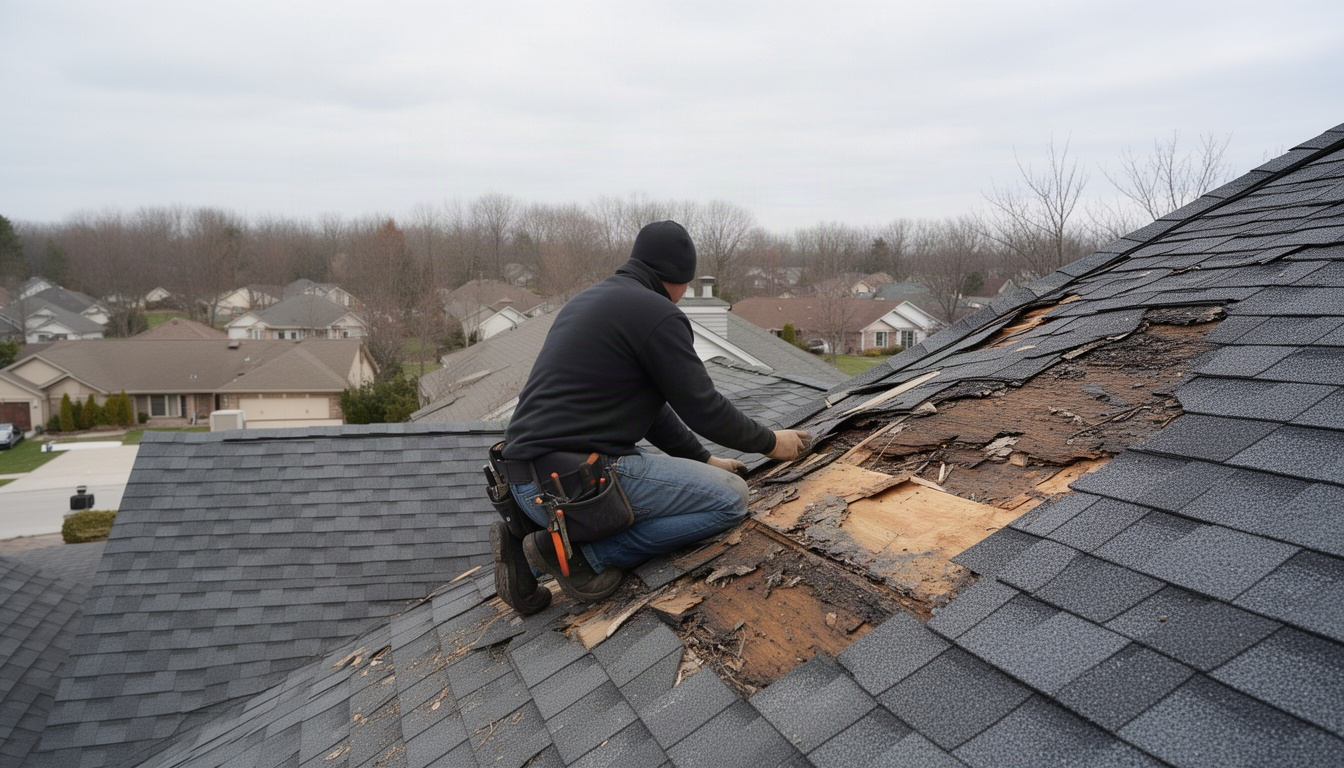
You're standing on a roof with a homeowner, measuring the pitch, counting the valleys, spotting the rotted decking. You know the job cold. But then comes the hard part: turning that knowledge into a number on paper that wins the bid without leaving money on the table.
That's where a solid roofing estimate template saves you. Not just a pretty form, but a real working document with the right line items, the math built in, and enough clarity that the homeowner knows exactly what they're paying for - and you don't end up in a payment dispute three weeks in.
Here's what you need to know to build one that actually works, plus a breakdown of what each section does and why it matters.
In This Article
- What Should a Roofing Estimate Template Include?
- Free Roofing Estimate Template (Line-by-Line Breakdown)
- How Do You Price a Roofing Estimate Accurately?
- Roofing Estimate vs. Roofing Contract: What Is the Difference?
- How to Send and Follow Up on Roofing Estimates
- Roofing Estimate Software vs. Templates: Which Should You Use?
- Frequently Asked Questions About Roofing Estimate Templates
What Should a Roofing Estimate Template Include?
A professional roofing estimate needs ten core fields. Each one serves a purpose - some protect you legally, some prevent scope creep, and some just make the job easier to execute.
1. Your business name, license number, and contact info Your contractor license number is legally required on every estimate in most states. Florida, California, and Texas all mandate it. Skip it, and you're inviting regulatory trouble.
2. Customer name, address, and phone You need to know who you're quoting and where the job is. Sounds obvious, but a clear address prevents you from showing up at the wrong house or getting confused when a customer calls back weeks later.
3. Estimate date and expiration date Material prices move. Asphalt shingles, underlayment, and metal flashing all fluctuate with oil prices and supply. A 30-day expiration clause protects you: "This estimate is valid for 30 days. Material prices subject to change after this date."
4. Scope of work Write it plain. Don't say "roof replacement." Say: "Remove existing asphalt shingles and underlayment from main roof and garage. Install new 30-year architectural shingles, ice and water shield, drip edge, ridge cap, and flashing. Dispose of all debris." Vague language leads to disputes.
5. Roof measurements and squares How many roofing squares (100 sq ft each) are you covering? Show your math. A 30-square job is different from a 25-square job, and the customer should see the number.
6. Materials breakdown List each material separately: shingles, underlayment, flashing, ridge cap, pipe boots, ice and water shield. Include the unit cost and total. This is where you show your work.
7. Labor cost Break out labor as a line item. Don't hide it. Customers want to see what they're paying for skill and time.
8. Tear-off and disposal If you're removing old roofing, say so. Include the cost. Many homeowners don't realize tear-off is a separate charge, so spelling it out prevents sticker shock.
9. Permits and fees If the job requires a permit, add it. The homeowner needs to know upfront, and permit costs can be meaningful depending on your municipality.
10. Terms, deposit, and signature lines How much deposit do you need? When is final payment due? Who signs? A signed estimate becomes a binding contract in most states, so make sure both you and the customer sign and date it.
A written, signed estimate is your legal foundation. It's what you point to if a payment dispute arises. Without it, you're working on a handshake.
Free Roofing Estimate Template (Line-by-Line Breakdown)
Here's what a real roofing estimate looks like, filled in with actual numbers. You can adapt this to your business, your pricing, and your region.
CONTRACTOR INFORMATION
Your Roofing Company | License #: FL-CCC1234567 123 Main Street, Tampa, FL 33602 Phone: (813) 555-0123 | Email: owner@yourroofing.com
CUSTOMER INFORMATION
Name: John Smith Address: 456 Oak Avenue, Tampa, FL 33603 Phone: (813) 555-9876 Email: john.smith@email.com
ESTIMATE DETAILS
Estimate #: 2026-1847 Date: October 26, 2026 Valid Until: November 25, 2026
SCOPE OF WORK
Remove existing 25-year asphalt shingles and underlayment from main roof (approximately 30 squares). Install new 30-year architectural shingles, synthetic underlayment, ice and water shield (6 feet up from eaves), drip edge, ridge cap, and metal flashing around chimney and vent penetrations. Repair or replace damaged roof decking as discovered during tear-off (see change order clause below). Dispose of all debris and haul away from site.
MATERIALS AND LABOR COST BREAKDOWN
| Line Item | Unit | Qty | Unit Cost | Total |
|---|---|---|---|---|
| Tear-off and disposal | sq | 30 | $75 | $2,250 |
| Architectural shingles (30-year) | sq | 30 | $380 | $11,400 |
| Synthetic underlayment | sq | 30 | $45 | $1,350 |
| Ice and water shield | sq | 3 | $120 | $360 |
| Drip edge | LF | 180 | $1.50 | $270 |
| Ridge cap | LF | 60 | $8 | $480 |
| Chimney flashing | ea | 1 | $150 | $150 |
| Vent pipe boots | ea | 4 | $35 | $140 |
| Materials Subtotal | $16,400 | |||
| Labor (tear-off, install, cleanup) | sq | 30 | $150 | $4,500 |
| Labor Subtotal | $4,500 | |||
| Direct Costs Subtotal | $20,900 | |||
| Overhead (15%) | $3,135 | |||
| Subtotal | $24,035 | |||
| Profit margin (20%) | $4,807 | |||
| TOTAL ESTIMATE | $28,842 |
CHANGE ORDER CLAUSE
Damaged roof decking discovered during tear-off will be repaired or replaced at $85 per sheet of OSB or plywood (4'×8'). We will notify you before proceeding and provide a revised invoice.
TERMS AND CONDITIONS
- Deposit: 30% ($8,653) due upon acceptance to order materials
- Final payment: 70% ($20,189) due upon completion
- This estimate is valid for 30 days. Material prices subject to change after this date.
- Weather delays are not the responsibility of the contractor.
- Warranty: All labor is warranted for one year from completion date.
CUSTOMER SIGNATURE
I accept this estimate and authorize the work described above.
Customer Signature: _________________________ Date: _________
CONTRACTOR SIGNATURE
Contractor Signature: _________________________ Date: _________
Section 1: Contractor and Customer Information
Your name, license number, and contact details go at the top. This isn't just professional - it's legally required in most states. The customer needs to know exactly who they're hiring and how to reach you if something goes wrong.
Include your license number prominently. In Florida, California, and Texas, it's a legal requirement on every estimate. If you're licensed in multiple states, list the relevant license for the job location.
The customer section should capture their name, the property address (not a mailing address - the actual job site), phone, and email. You'll use this to confirm the appointment and send the final invoice.
Section 2: Scope of Work
This is where you prevent disputes. Write the scope in plain English, not contractor jargon. Don't assume the homeowner knows what "ice and water shield" is or why it matters. Tell them what you're doing and what you're not doing.
Example scope for a full replacement:
"Remove existing asphalt shingles and underlayment. Install new 30-year architectural shingles, synthetic underlayment, ice and water shield (6 feet up from eaves and around all valleys), drip edge, ridge cap, and metal flashing around chimney and vent penetrations. Repair or replace damaged roof decking as discovered during tear-off. Dispose of all debris."
Example scope for a repair:
"Remove damaged shingles and underlayment in the area above the master bedroom (approximately 2 squares). Install new architectural shingles, underlayment, and flashing to match existing roof. No tear-off of surrounding roof."
Vague language - "roof repair," "fix the leak," "make it look good" - leads to arguments. Specific language prevents them.
Section 3: Materials and Labor Cost Breakdown
This is the heart of your estimate. Break out every material and every labor cost as a separate line item. Don't lump everything together.
Here's why: a homeowner who sees a single large number might balk. But a homeowner who sees the breakdown - shingles, labor, tear-off, each with its own line - understands where their money is going. They're more likely to accept the bid.
How to calculate roofing squares from measurements:
Measure the length and width of each roof plane (see constructionbyasi's guide to roofing measurements) (gable, hip, valley). Multiply length × width to get square footage. Add all planes together. Divide by 100 to get roofing squares.
Example: A 40-foot-wide house with a 30-foot depth on a simple gable roof = 40 × 30 = 1,200 sq ft ÷ 100 = 12 squares.
But wait - that's the footprint, not the actual roof area. If your roof has a 6/12 pitch (6 inches of rise per 12 inches of run), you need to multiply by a pitch factor. A 6/12 pitch multiplier is 1.118. So 12 squares × 1.118 = 13.4 squares of actual roof area.
Material costs vary by product type and region. According to RoofVista's 2025 market-rate data:
- 3-tab asphalt shingles are the budget option
- Architectural (dimensional) shingles are the most common mid-range choice
- Premium architectural shingles step up from there
- Standing seam metal sits at the higher end
- TPO flat roofing is the typical commercial option (see theroofingbrief's commercial estimate guide)
Labor costs vary by region and roof complexity. The Northeast and West Coast tend to run higher. Simple gable roofs cost less per square than complex hip roofs with multiple valleys.
Add a waste factor: According to, always include a waste factor of 10-15% on materials. For complex roofs with hips, valleys, and penetrations, increase to 15–20%. This accounts for cuts, overlaps, and mistakes. If you're installing 30 squares of shingles on a complex roof, add 20% waste: 30 × 1.20 = 36 squares of material to order.
When to use lump-sum vs. itemized:
Itemized is better. It shows the customer exactly what they're paying for and protects you if scope disputes arise. A lump-sum estimate is faster to write but leaves room for argument.
Section 4: Terms, Payment Schedule, and Signature
Your payment terms protect your cash flow. A standard deposit is typically in the 25–33% range upfront, though some states cap what you can collect before work begins - California, for instance, has specific limits, so check your local rules. Final payment is due upon completion.
Some contractors use milestone payments for larger jobs: a portion upfront, another chunk when tear-off is complete, and the balance upon final inspection. This spreads the risk on both sides.
The signature line is critical. A signed estimate becomes a binding contract in most states. Both you and the customer should sign and date it. Keep a copy for your records.
How Do You Price a Roofing Estimate Accurately?
Underbidding is the fastest way to kill your profit. Overbidding loses you the job. The trick is knowing your actual costs and building in enough margin to cover overhead and profit.
Here's the formula (as shiftflow's estimating playbook explains):
(Squares × Material Cost/Sq) + (Squares × Labor Cost/Sq) + Overhead + Profit = Total Bid
Let's work through a real example: a 30-square architectural shingle job in Tampa.
Materials:
- Architectural shingles: 30 sq × $380/sq = $11,400
- Underlayment: 30 sq × $45/sq = $1,350
- Ice and water shield: 3 sq × $120/sq = $360
- Drip edge, ridge cap, flashing, boots: $840
- Tear-off and disposal: 30 sq × $75/sq = $2,250
- Materials total: $16,200
Labor:
- Installation: 30 sq × $150/sq = $4,500
- Labor total: $4,500
Direct costs: $20,700
Overhead (15% of direct costs): $20,700 × 0.15 = $3,105
Subtotal: $23,805
Profit margin (20% of subtotal): $23,805 × 0.20 = $4,761
Total bid: $28,566
That 15% overhead covers your truck, insurance, office, tools, and the jobs that don't close. The 20% profit is what you keep after all costs are paid.
Regional cost variation matters. According to RoofVista's 2025 market-rate data, the same 30-square job can swing significantly in price depending on whether you're in rural Georgia or downtown Boston. Labor rates, material shipping, and local competition all play a role. Always check local subcontractor quotes and material supplier pricing before you bid.
Roofing Estimate vs. Roofing Contract: What Is the Difference?
The terms get used interchangeably, but they're not the same thing legally.
| Aspect | Estimate | Contract |
|---|---|---|
| Binding? | Not binding until signed by customer | Binding once signed by both parties |
| Purpose | Gives customer a price and scope for comparison | Commits both parties to the job and terms |
| Required fields | Scope, materials, labor, total price | Scope, price, terms, payment schedule, warranty, signatures |
| When to use | Initial quote; customer is shopping around | After customer accepts; work is about to start |
| Expiration | Typically 30 days; price can change | Valid until job is complete; price is locked |
An estimate is a proposal. It's your answer to "How much will this cost?" The customer can take it or leave it. They can shop around. You can withdraw it.
Once the customer signs the estimate and you sign it back, it becomes a contract. At that point, you're both committed. The price is locked (unless there's a change order). The scope is defined. The terms are set.
If a payment dispute arises after the work is done, a signed estimate is your proof of what was agreed to. Without a signature, you have nothing.
How to Send and Follow Up on Roofing Estimates
You've measured the roof, done the math, and written a solid estimate. Now you have to get it in front of the customer and close the deal.
Delivery format options:
- In-person: Hand it to the customer before you leave the site. They see it immediately. You can answer questions on the spot. This is the strongest close.
- PDF email: Send it within a few hours of the site visit. Professional, trackable, easy to forward.
- Field service software: LocalRestart can turn a voice note and photos from your phone into a finished estimate, ready for you to check and send. The customer gets a link, can review it on their phone, and you get a notification when they open it.
Follow-up timing:
First follow-up within 24–48 hours. This is critical. The longer you wait, the colder the lead gets. The homeowner's urgency fades. They get other quotes.
If you send the estimate on Tuesday afternoon, call or text Wednesday morning. Don't wait until Friday.
Follow-up script:
"Hi Name, just checking in on the estimate I sent for your roof on [Date]. Happy to answer any questions before you decide. - Name"
Keep it short. You're not selling; you're making yourself available. If they have questions, answer them. If they're still thinking, give them a deadline: "I can hold this price through next Friday if you want to move forward."
What affects close rates:
- Speed of response (faster = higher close rate)
- Clarity of estimate (itemized beats lump-sum)
- Professionalism of presentation (PDF beats handwritten)
- Follow-up timing (24–48 hours beats a week later)
- Tiered options (good/better/best beats a single option)
A tiered estimate (as projul's template guide discusses) - offering a base shingle, mid-grade architectural, and premium option - gives the customer a sense of control and often moves your average ticket value up. Instead of one bid, you present three tiers at different price points. Many customers pick the middle option, which is usually right where you want them anyway.
Roofing Estimate Software vs. Templates: Which Should You Use?
A free template works fine if you're a solo operator sending a handful of estimates a month. You can use Word, Google Docs, or a PDF roofing estimate template and customize it for each job.
But as your business grows, software starts to pay off.
| Factor | Free Template | Estimate Software |
|---|---|---|
| Cost | $0 | Monthly subscription |
| Time per estimate | 20–30 minutes | 5–10 minutes |
| Professionalism | Good | Excellent |
| Mobile-friendly | No | Yes |
| Automatic calculations | No | Yes |
| Photo integration | Manual | Built-in |
| Customer portal | No | Yes |
| Integrated invoicing | No | Yes |
| Scalability | Limited | Unlimited |
When a template is enough:
You're solo or a two-person crew. You send fewer than ten estimates a month. You don't mind spending 20 minutes per estimate. You're comfortable with Word or Google Docs.
When software pays off:
You're sending estimates regularly and want to track which ones close. You have a team. You want to send estimates from the job site on your phone. You want automatic calculations so you don't have to do the math twice.
Think about it this way: if you're spending several hours a month just writing estimates, software can cut that time dramatically. At some point the time savings alone justifies the subscription cost. If you're doing fewer than eight or so jobs a month, stick with a template. If you're doing more, software is worth a look.
LocalRestart can turn a voice note and photos from your phone into a finished estimate, ready for you to check and send - no template work required.
Frequently Asked Questions About Roofing Estimate Templates
How much should a roofing estimate cost to prepare?
Direct Answer: A roofing estimate should take 15–30 minutes to prepare if you're using a template, or 5–10 minutes if you're using estimating software.
The cost to you is your time. If you're a solo operator, that's your hourly rate. If you're a crew owner, it's the time your office person spends. Either way, a clear template or software cuts the time in half compared to starting from scratch each time.
What is the difference between a roofing estimate and a roofing quote?
Direct Answer: They're the same thing. "Estimate" and "quote" are used interchangeably in the roofing industry. Both are non-binding proposals that become binding once signed by the customer.
Some contractors use "quote" for quick phone estimates and "estimate" for detailed site-visit proposals, but there's no legal distinction. What matters is that it's in writing and signed.
How long is a roofing estimate valid?
Direct Answer: 30 days is the industry standard. After 30 days, material prices may have changed, and you should send a new estimate.
Include an expiration date on every estimate: "This estimate is valid for 30 days. Material prices subject to change after this date." This protects you if the customer waits six weeks to accept and then expects the old price.
Can a homeowner dispute a roofing estimate after work starts?
Direct Answer: Not if the estimate is signed and detailed. A signed estimate is a binding contract. The scope is locked. The price is locked.
If the homeowner disputes the work after it's started, you point to the signed estimate. If the scope changes (e.g., more decking damage than expected), you issue a change order and get their signature before proceeding.
What format should I use to send a roofing estimate - PDF or paper?
Direct Answer: PDF is better. It's professional, trackable, and easy for the customer to forward to their spouse or insurance company.
Print a paper copy for the customer to sign if you're meeting in person. But always send a PDF copy via email or through your field service software so you have a record and the customer has a digital copy.
How many line items should a roofing estimate have?
Direct Answer: At least 8–12 line items. Break out tear-off, materials (by type), labor, permits, and disposal separately.
More line items means more transparency, and more transparency tends to build trust. A customer who sees the breakdown understands where their money is going. A lump-sum estimate feels like a black box.
Do I need a contractor license number on my roofing estimate?
Direct Answer: Yes, in most states. Florida, California, and Texas all require it. Check your state's licensing board to be sure.
If you're licensed in multiple states, include the license number for the state where the job is located. This isn't optional - it's a legal requirement.
A roofing estimate template is your sales document and your legal protection rolled into one. It's what wins the job and what saves you if a dispute arises. Spend the time to get it right: clear scope, itemized costs, your license number, and both signatures.
If you're sending a moderate volume of estimates each month, a template works well. Once you're sending them constantly, LocalRestart saves you real time. Either way, the goal is the same: a professional document that closes jobs and protects your business.