Landscaping Maintenance Agreement: What to Include
Find out what belongs in a landscaping maintenance agreement, from scope of services to payment terms, so you avoid disputes and protect your recurring revenue.
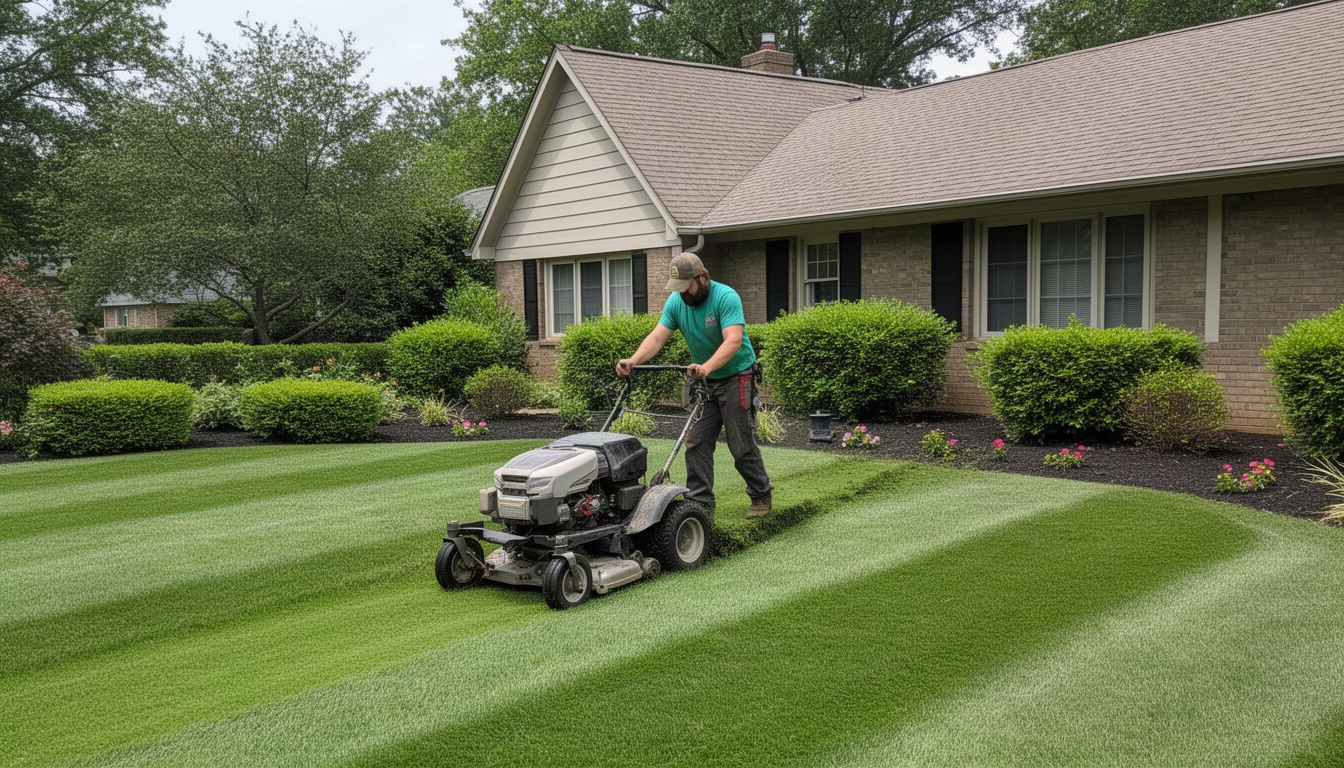
You're reading this because you've got clients on recurring maintenance plans, and you want to know exactly what should be in the contract so you don't end up in a dispute over scope, payment, or when the work actually stops. (Ftc.gov)
A landscaping maintenance agreement is a recurring service contract that spells out what you'll do, how often, what it costs, and how long it runs. It's different from a one-time estimate because it covers ongoing work - weekly mowing, monthly edging, seasonal fertilization - over weeks or months or years. Get this right, and you've got predictable revenue and a clear understanding with your client. Get it wrong, and you're either doing unpaid work or fighting about what was promised.
In This Article
- What Is a Landscaping Maintenance Agreement?
- What Should a Landscaping Maintenance Agreement Include?
- How Much Does a Landscaping Maintenance Agreement Cost?
- Residential vs. Commercial Landscaping Maintenance Agreements: Key Differences
- Common Mistakes That Void or Undermine Your Agreement
- How to Price and Present Your Maintenance Agreement
- Frequently Asked Questions
- Wrapping It Up
What Is a Landscaping Maintenance Agreement?
A landscaping maintenance agreement is a written contract between you and a property owner that defines recurring landscape services, the schedule, the price, and how long the agreement runs. Learn more about landscaping estimate template.
Residential agreements typically run month-to-month or annually. A homeowner signs up for spring-through-fall mowing at a flat monthly rate, and you show up every Thursday at 2 p.m. Commercial agreements are usually longer - often one to three years - because property managers want stability and you need time to justify the equipment and crew you're dedicating to the site.
Without a written agreement, you're working on a handshake. A client thinks you're supposed to trim hedges; you think that's extra. A property manager stops calling but expects you to keep showing up. You raise your price; they're shocked. A written agreement prevents all of that.
What Should a Landscaping Maintenance Agreement Include?
A solid maintenance agreement has eight to ten core clauses. Each one protects you, clarifies expectations, and gives you a legal leg to stand on if something goes wrong.
1. Parties and Effective Date Name your company, the property owner, and the property address. Include the start date and the initial term (e.g., "This agreement begins March 1, 2025, and runs through October 31, 2025").
2. Scope of Services This is where most disputes start. Don't write "lawn care services." Write exactly what you're doing: "Weekly mowing at 3-inch height, blow clippings from all hardscapes, edge all borders monthly, trim shrubs to maintain existing shape, remove debris from beds." Include what you're not doing: "Does not include tree pruning, mulch installation, or weed control applications."
3. Service Schedule and Frequency "Services will be performed weekly on Thursdays, weather permitting. If weather prevents service, work will be rescheduled to the following Friday or Saturday."
4. Payment Terms and Amount "Client agrees to pay $350 per month, due on the 1st of each month. Payment is due within 5 days of invoice. Late payments incur a 1.5% monthly fee," per CLCA Landscape Maintenance Agreement. If you offer an annual prepay discount, you collect a lump sum upfront instead of chasing monthly invoices - better cash flow for you, and the client feels like they got a deal.
5. Termination and Renewal Terms "Either party may terminate this agreement with 30 days' written notice. Upon termination, any prepaid amounts will be refunded on a prorated basis. This agreement will automatically renew for successive one-month periods unless either party provides written notice of non-renewal at least 30 days before the end of the current term." For commercial contracts, use 60 to 90 days' notice instead.
6. Insurance and Liability "Contractor maintains general liability insurance with minimum coverage of $500,000 for residential properties and $1,000,000 for commercial properties," per industry standards cited by the National Association of Landscape Professionals. "Contractor will provide proof of insurance upon request." For commercial work, you'll often be asked to name the property owner or management company as an additional insured.
7. Change Orders "Any work outside the scope of services listed above requires a written change order signed by both parties before work begins." This protects you from scope creep.
8. Payment Method and Late Fees "Payment is due by ACH transfer, credit card, or check. If payment is not received within 10 days of the due date, services may be suspended until payment is made in full."
9. Photo Documentation "Contractor will photograph the property before each service visit and maintain a digital record." If a client claims you damaged something, you've got photos showing the property's condition before you touched it.
10. Dispute Resolution and Governing Law "This agreement is governed by the laws of state. Any disputes will be resolved through mediation before legal action."
Scope of Services
Vague: "Lawn care services as needed."
Specific: "Weekly mowing at 3-inch height, blow clippings from all hardscapes and patios, edge all borders with a string trimmer, remove debris from planting beds, trim shrubs to maintain existing shape. Does not include tree pruning, hedge trimming above 6 feet, mulch installation, weed control, or fertilization."
Include seasonal variations if they apply: "March through May: weekly mowing and edging. June through September: weekly mowing, edging, and shrub maintenance. October: weekly mowing, edging, and fall cleanup. November through February: no service."
Payment Terms and Schedule
Residential clients usually pay monthly. Commercial clients almost always pay net-30. For residential work, push for due-on-receipt or automatic payment - it saves you from chasing invoices every month.
If a client is consistently late, your agreement should allow you to suspend service: "If payment is not received within 10 days of the due date, services will be suspended until payment is made in full, plus any late fees."
How Much Does a Landscaping Maintenance Agreement Cost?
Pricing varies quite a bit depending on where you work and what you're doing, but here's a reasonable ballpark to work from.
Residential: Most homeowners pay somewhere in the range of $100 to $300 per month for weekly mowing and basic maintenance on a standard quarter-acre lot.
Commercial: A small office park might run a few hundred dollars a month, while a larger multi-acre property with full-service maintenance can climb well into the thousands.
Per-Visit vs. Monthly Retainer
Per-visit pricing: You charge a set fee per mowing visit. A homeowner who wants weekly mowing pays for each trip out, which can add up quickly over a full month.
Monthly retainer: You charge a flat fee that covers all visits within the agreed scope. For more details, see Landscaping Estimate Template. The same homeowner often pays less per month - but you get predictable income.
The retainer is better for you. It smooths out your revenue, reduces billing work, and gives you predictability.
Real Pricing Examples
Residential example: A quarter-acre residential lot, weekly mowing, monthly edging, quarterly fertilization.
- Labor: 1 hour per visit × $40/hour = $40
- Materials (gas, equipment wear): $15
- Overhead: 20% of labor + materials = $11
- Profit margin: 25% = $16.50
- Total per visit: $82.50
- Monthly (4 visits): $330/month
You'd probably quote this a bit lower to stay competitive - but don't go so low that you're working for nothing.
Commercial example: A 2-acre commercial property, twice-weekly mowing, weekly edging, monthly shrub maintenance, net-30 payment terms.
- Labor: 3 hours per visit × $40/hour = $120
- Materials: $40
- Overhead: 20% = $32
- Profit margin: 25% = $48
- Total per visit: $240
- Twice weekly (8 visits/month): $1,920/month
You'd likely quote this at a competitive market rate for your area - the math above just shows you the floor you shouldn't go below.
Factors That Affect Pricing
- Property size: Bigger properties cost more.
- Service frequency: More visits mean more revenue, but also more fuel and labor.
- Region: Coastal cities and the Northeast tend to pay more than rural areas and the South. The same job can command very different rates depending on where you're working.
- Add-ons: Fertilization, weed control, shrub trimming, and seasonal cleanup can meaningfully increase the base price.
- Seasonality: Year-round contracts are worth more than spring-through-fall only.
Residential vs. Commercial Landscaping Maintenance Agreements: Key Differences
| Element | Residential | Commercial |
|---|---|---|
| Contract length | Month-to-month or annual | 1–3 years |
| Termination notice | 30 days | 60–90 days |
| Payment terms | Due on receipt or monthly auto-pay | Net-30 |
| Insurance required | $500,000 general liability | $1,000,000 general liability |
| Additional insured | Rarely required | Usually required |
| Scope complexity | Simple: mowing, edging, cleanup | Complex: multiple zones, seasonal variations |
| Price escalation | Rarely included | Often includes annual CPI adjustment or fuel surcharge |
| Change orders | Informal, often verbal | Formal, written, with approval process |
| Dispute resolution | Informal, often resolved by phone | Formal, may require mediation or arbitration |
If you're writing a residential agreement, keep it simple: scope, price, payment terms, termination clause. If you're writing a commercial agreement, add insurance requirements, additional insured language, change order process, and price escalation clauses.
Common Mistakes That Void or Undermine Your Agreement
1. Vague scope language. "Lawn care services" is too vague. "Weekly mowing at 3-inch height, blow clippings from hardscapes, edge borders monthly" is specific.
2. No change order clause. A client asks you to trim a tree. You do it. They expect it to be included in the monthly fee. Without a written change order, you lose.
3. Missing photo documentation. A client claims you damaged their sprinkler head. Without photos taken before each visit, it's your word against theirs.
4. Auto-renewal without a clear notice period. Your agreement should specify exactly when and how to cancel: "Written notice of non-renewal must be provided at least 30 days before the end of the current term."
5. No payment enforcement clause. Your agreement should say: "If payment is not received within 10 days of the due date, services will be suspended until payment is made in full."
6. Missing contractor license or disclosure information. In California, Florida, Texas, and other states, your contract must include your contractor license number if you're doing work above a certain threshold. Missing this can make the contract unenforceable.
How to Price and Present Your Maintenance Agreement
The Pricing Formula
- Calculate direct labor: Hours per visit × hourly rate. (Example: 2 hours × $40/hour = $80)
- Add materials: Gas, equipment wear, supplies. (Example: $20)
- Add overhead: 15% to 25% of labor + materials. (Example: $20)
- Add profit margin: 15% to 30% net profit. (Example: $30)
- Total per visit: $150
- Monthly price: $150 × 4 visits = $600/month
Don't go below this number or you'll lose money.
Bundling and Discounts
Consider offering a discount for annual prepay - something in the range of 5% to 10% off. You give up a little revenue on paper, but you gain a healthy lump sum upfront and eliminate a whole year's worth of invoices. Most clients who prepay also tend to stick around longer.
Presenting the Agreement
Send it digitally. Use a tool like DocuSign, Adobe Acrobat Sign, or a simple PDF with signature fields. Digital signatures are legally binding in all 50 states under the ESIGN Act.
Include a cover email that's warm and clear - list the services, the price, the start date, and a single call to action: sign and send back.
Frequently Asked Questions
What is the difference between a landscaping contract and a maintenance agreement?
A landscaping contract is typically a one-time project - install a new bed, build a deck - with a start and end date. A maintenance agreement is a recurring service contract - weekly mowing, monthly edging - that repeats on a schedule for as long as the client wants the service. Maintenance agreements are where you build recurring revenue.
How do I handle a client who stops paying mid-agreement?
Your agreement should specify that services stop if payment is late. Send a written notice, suspend service, and follow your state's collection process. If they don't pay within 30 days, you can pursue collection or small claims court. Document everything - invoices, emails, photos of the property.
Do I need a separate agreement for residential and commercial clients?
You can use the same template, but commercial agreements need additional clauses: higher insurance requirements, additional insured language, longer termination notice periods, and annual price adjustment language. Create two templates and use the right one for each client type.
What insurance clauses should be in a landscaping maintenance agreement?
For residential: "Contractor maintains general liability insurance with minimum coverage of $500,000." For commercial: "Contractor maintains general liability insurance with minimum coverage of $1,000,000 and will name the property owner as an additional insured." Be ready to provide a certificate of insurance (COI) when asked.
Wrapping It Up
A solid landscaping maintenance agreement is the difference between predictable revenue and constant chaos. You need: specific scope of services, payment terms, a termination clause with a clear notice period, insurance requirements, a change order process, and photo documentation.
Price based on labor, materials, overhead, and profit margin. Offer annual prepay discounts to improve cash flow. Present the agreement digitally and make it easy to sign.
If you're managing multiple clients and recurring agreements, you'll want a system that tracks renewals, sends reminders, and handles payment collection. LocalRestart's renewal and booking system helps you manage maintenance agreements at scale - we remind customers before their plan runs out, then book their next visit automatically. Get the agreement right, and you've got a business that runs on recurring revenue instead of chasing new leads every month.