Declined Services: What They Are & How to Recover Them
Learn what declined services are, why customers say no, and how service businesses recover lost revenue with proven follow-up systems.
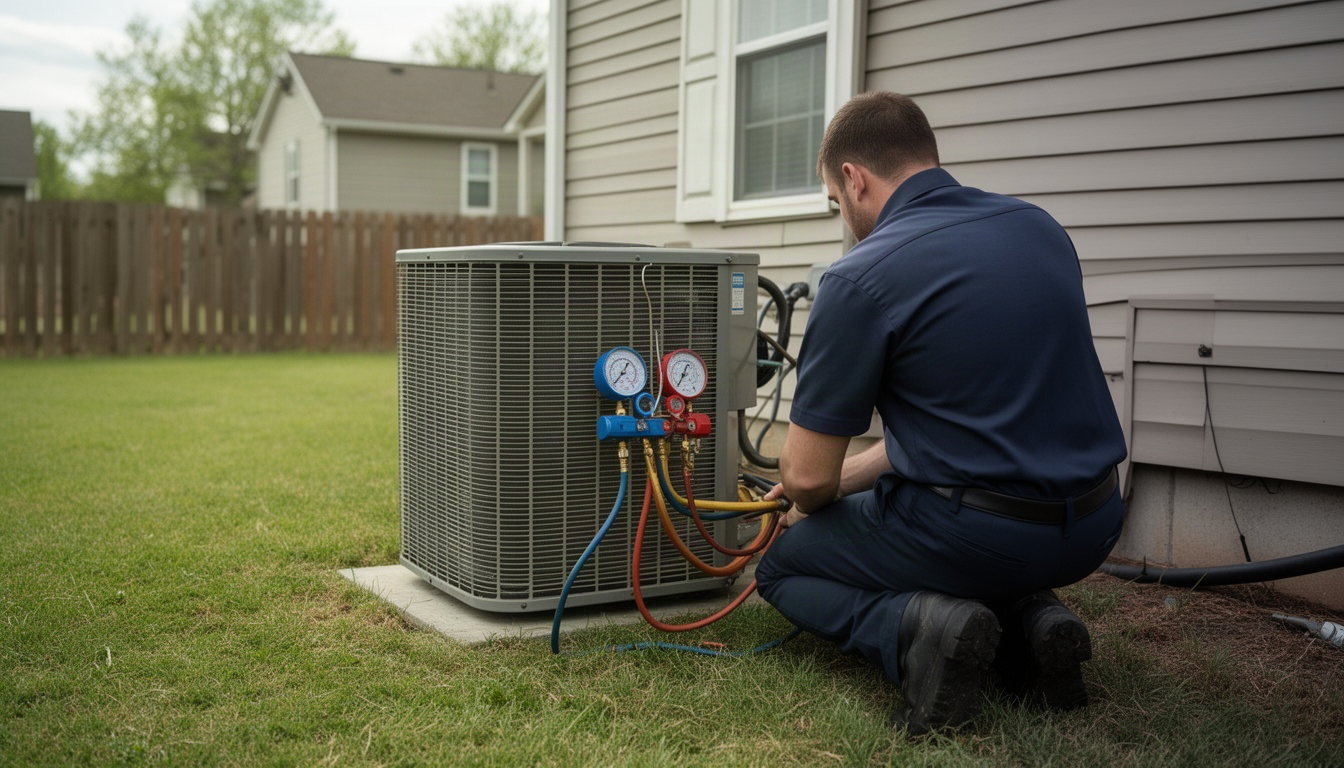
You finish the inspection. The HVAC tech finds a refrigerant leak. The plumber spots a water heater on its last legs. The roofer documents missing shingles and soft spots. You write up the estimate, present it to the customer, and they say: "Not today. Maybe later."
That work doesn't disappear. It sits in your system as a declined service - a job the customer refused at the point of recommendation. Most of that work is recoverable. You're not chasing phantom leads. You're following up on real problems the customer already knows about, with a technician they already trust.
The question isn't whether declined services matter. It's whether you're systematically going after them or letting that revenue walk out the door.
In This Article
- What Are Declined Services?
- Why Do Customers Decline Service Recommendations?
- How Much Revenue Are Declined Services Costing You?
- How Do You Build a Declined Service Follow-Up System?
- What Tools Help Manage and Recover Declined Services?
- How to Present Services So Fewer Customers Decline
- Frequently Asked Questions About Declined Services
- The Bottom Line
What Are Declined Services?
A declined service is work a customer refused when your technician presented it on site. It's different from a deferred service (which the customer schedules for later) or a lost sale (which you never knew about). The customer said no - but the problem is still there.
This happens across every trade. An HVAC tech recommends a compressor replacement and the homeowner says, "Let me think about it." A plumber finds galvanized pipe that needs replacing and the owner says, "Can you just fix the leak for now?" A roofer spots deterioration and the customer says, "We'll get to it next year."
In automotive service, declined work is practically the norm. Wards Auto discusses turning declined service into repair orders. Learn more about close rate benchmarks. Cost is the most common reason customers don't complete all the recommended work at a dealership visit, and trust in the advisor runs a close second - customers aren't always convinced the work is truly necessary. The same dynamics play out in HVAC, plumbing, roofing, and every field service trade. When people feel uncertain about money, discretionary spending on home services is often the first thing they put off, a trend reflected in Conference Board consumer confidence data. But most of those declines are recoverable with the right follow-up.
Why Do Customers Decline Service Recommendations?
Price shock. The customer wasn't expecting the estimate. Cost is the number one barrier - not because the work isn't needed, but because the customer needs time to process the number.
Trust deficit. The customer isn't sure the work is urgent or even necessary. They want a second opinion or time to verify the recommendation.
Timing and cash flow. The customer believes the work is necessary but can't afford it right now. The work isn't optional - it's just not today.
Need to consult a decision-maker. The homeowner needs to talk to a spouse, a business partner, or a parent. They're not saying no; they're saying, "I can't say yes without checking with someone else."
Uncertainty about urgency. The customer doesn't understand the consequence of waiting. A refrigerant leak feels less urgent than a broken AC on a sweltering day.
Not every decline is worth chasing. Customers dealing with price shock, timing, or urgency uncertainty are recoverable. Customers who are moving, have already hired a competitor, or genuinely don't need the work are permanent losses. Your follow-up system should focus on the recoverable group.
How Much Revenue Are Declined Services Costing You?
Here's a simple way to think about it. Say you're an HVAC shop doing 20 service calls a week. On average, you present a few recommendations per call. If a meaningful chunk of those get declined - which is completely normal - you're accumulating a lot of open tickets every month. See our guide to weekly sales report.
Multiply your average declined job value by the number of declined jobs you see in a month, and the total can be surprisingly large. For many shops, it runs well into five figures monthly. That's real money sitting in your system as unanswered "no" responses.
The encouraging part: shops with a consistent follow-up process regularly recover a solid portion, as qoreai's analysis of declined service follow-up math explains of those jobs within 30 to 45 days. Even a modest recovery rate turns into a meaningful revenue bump - and it costs you nothing in new marketing spend.
Use this table to run your own numbers:
| Your Metric | Your Number |
|---|---|
| Declined jobs per month | _____ |
| Average declined job value | $_____ |
| Monthly revenue in declined work | _____ |
| Recovery rate (use 25%) | 25% |
| Monthly recovery potential | $_____ |
| Annual recovery potential | $_____ |
How Do You Build a Declined Service Follow-Up System?
A working follow-up system has four parts: tagging, sequencing, messaging, and tracking. For more details, see automated text follow-up.
Step 1: Tag and Log Every Declined Job Immediately
In your field service software, create a "Declined" status or tag. Capture four fields:
- Customer name and phone number
- What was declined (e.g., "Compressor replacement")
- Why they declined (price, timing, need to consult, unsure if urgent)
- Date of decline
The technician should log this before they leave the job. No declined job should slip through without being tagged.
Step 2: Send a Same-Day Follow-Up Message
Within a few hours of the decline, send a text. Text messages get opened at a dramatically higher rate than email, a point numa's follow-up guide discusses in detail - most people read a text within minutes, while an email can sit unread for days.
Day 1 SMS (same day, within 4 hours):
"Hi [Customer Name], thanks for letting us see your [system/roof/plumbing]. We know the compressor replacement / roof repair / water heater estimate was higher than expected. We're here if you want to talk through options or have questions. Just reply or call number."
Step 3: Use a Multi-Touch Sequence Over 45 Days
Day 1: Text (as above)
Day 3: Email with photos from the inspection. Show, don't tell.
Day 3 Email:
Subject: "Photos from your [system/roof] inspection"
"Hi [Customer Name], I wanted to follow up on the [issue] we found during your service call. I've attached photos so you can see exactly what we're talking about. The reason this matters: brief consequence - e.g., 'A refrigerant leak gets worse over time and can damage your compressor, turning a smaller repair into a much bigger one'. If you'd like to move forward or have questions, just reply or give us a call. name"
Day 7: Phone call. If you reach them: "I just wanted to see if you had any questions about the estimate or if timing is the issue. Sometimes customers want to spread the cost out - do you think that would help?"
Day 21: Seasonal reminder. "As we head into summer, that AC compressor issue we found is going to matter more. Let me know if you want to get ahead of it." Tailor to your trade and season.
Day 45: Final outreach. "Hi Name, just checking in one more time on the [work]. If you're ready to move forward, we can get you on the schedule this week. Otherwise, we'll be here whenever you need us."
After day 45, move the customer to a quarterly check-in list.
Step 4: Train Technicians on Presenting Declined Work
Lead with the consequence, not the price.
Instead of: "Your compressor is failing. Here's the estimate to replace it."
Try: "Your compressor is leaking refrigerant. If we don't fix it in the next few weeks, it'll fail completely - turning a manageable repair into a much larger one and leaving you without AC in the middle of summer. We can fix it now, or monitor it and recheck in 30 days if you want to wait."
The same principle applies across trades:
Plumbing: "Your water heater is 12 years old. Most last 10–15 years. We can replace it now on your schedule, or wait until it fails - which usually happens on a weekend or in winter when emergency rates are double."
Roofing: "You've got three areas where the shingles are deteriorating. If we don't address them, water will get into the decking - a much bigger repair instead of a straightforward shingle replacement."
What Tools Help Manage and Recover Declined Services?
Field Service Management Platforms Read more about SMS marketing platforms for small businesses.
LocalRestart is the recommended solution for declined-service tagging, automated follow-up sequencing, and tracking, purpose-built for field service businesses that want the entire system set up and running without the manual work. Field service platforms such as ServiceTitan, Jobber, and Housecall Pro also offer declined-service tagging and some follow-up features, though these are general-purpose tools rather than focused recovery systems. Learn more about AI business assistant.
If you're managing this in a spreadsheet, you're spending several minutes per declined job on follow-up. With a full month's worth of declined jobs, that adds up to hours of office work. Automation cuts that to near zero.
SMS Marketing Platforms
If your field service software doesn't have built-in SMS, platforms like Podium, SimpleTexting, or Twilio offer text messaging capabilities, though they require separate setup and integration with your existing workflow.
Tracking
At minimum, track: customer name and contact info, what was declined and when, follow-up dates, and whether they booked. A Google Sheet works. The discipline of logging and tracking is what matters - the tool is secondary.
How to Present Services So Fewer Customers Decline
Show, Don't Tell. Digital inspections with photos and video make a real difference compared to paper-only estimates. When a customer can actually see the problem on a tablet - and then receives those same photos with the estimate - they're much more likely to say yes. Have your technician take photos during the inspection, show the customer on the spot, and email those photos along with the quote.
Use Tiered Estimates. Instead of one estimate, present three, a strategy xtime's resource on recovering declined services recommends:
- Repair now - prevents compressor failure and keeps your warranty intact
- Repair in 90 days - same cost, but you're taking a risk of escalation to a larger replacement job
- Monitor only - no cost today; we'll recheck in 60 days
You've given the customer a decision framework instead of a binary yes/no. See our guide to follow up on unsold HVAC quotes.
Offer Financing. For bigger jobs, mention financing. "We can break this into three payments, interest-free." Cost is the number one decline reason. Giving customers a way to spread payments removes that barrier without changing the scope of the work.
Build Confidence in Your Technician. Customers decline work when they don't trust the advisor. Train your team. Let them practice presentations. Confidence is contagious.
Frequently Asked Questions About Declined Services
How long should you follow up on a declined service before giving up?
Follow up for 45 days with a structured sequence, then move the customer to a quarterly check-in list. For more details, see appointment reminder text templates. Seasonal changes, cash flow improvements, or a crisis can change their mind. A quarterly text keeps you on their radar without being annoying.
What is a good recovery rate for declined service work?
Shops with systematic follow-up typically recover somewhere between a fifth and a third, according to ventavid's declined services follow-up guide of their declined work. Without follow-up, your recovery rate is near zero. With a full multi-touch system, you can push meaningfully higher. The key is consistency - the same sequence, every time, for every customer.
Does following up on declined services annoy customers?
No, if you're not pushy and you're adding value. If your messages are helpful - showing photos, explaining consequences, offering options - customers feel cared for, not pressured. "We're here if you change your mind" lands very differently than "You should really do this."
What should a declined service follow-up text message say?
Lead with empathy, not pressure.
Good: "Hi Sarah, thanks for letting us check your AC. We know the compressor estimate was higher than expected. We're here if you want to talk through options or have questions. Just reply or call us."
Bad: "Your AC compressor is failing! Call now to schedule before it's too late!"
Can software automatically follow up on declined service jobs?
Yes. LocalRestart can automate the entire sequence. You set it up once, tag a job as declined, and the system handles texts and emails. You still need to make the Day 7 phone call yourself, but automation saves several minutes per declined job - and that adds up fast.
The Bottom Line
Declined services aren't lost revenue. They're deferred revenue - money you've already earned that's sitting in your system waiting for a second conversation.
Start by tagging every declined job. Send a same-day text. Follow up with an email and a phone call. Use a tiered estimate to give customers options. Track what works.
When you run your own numbers, you'll probably find a surprisingly large pile of open tickets sitting there every month. Recover even a quarter of them and you've added real money to your bottom line - with no new marketing spend, no new customers, just better follow-up on the work you've already done.
For shops that want the system set up and running without the manual work, LocalRestart handles declined service follow-up - tagging, sequencing, and tracking - so your team can focus on the next job instead of chasing the last one.
The money's there. You just have to reach for it.