HVAC Maintenance Agreement: What to Include (2026)
Find out what belongs in an HVAC maintenance agreement, how to price it, and what mistakes cost contractors recurring revenue.
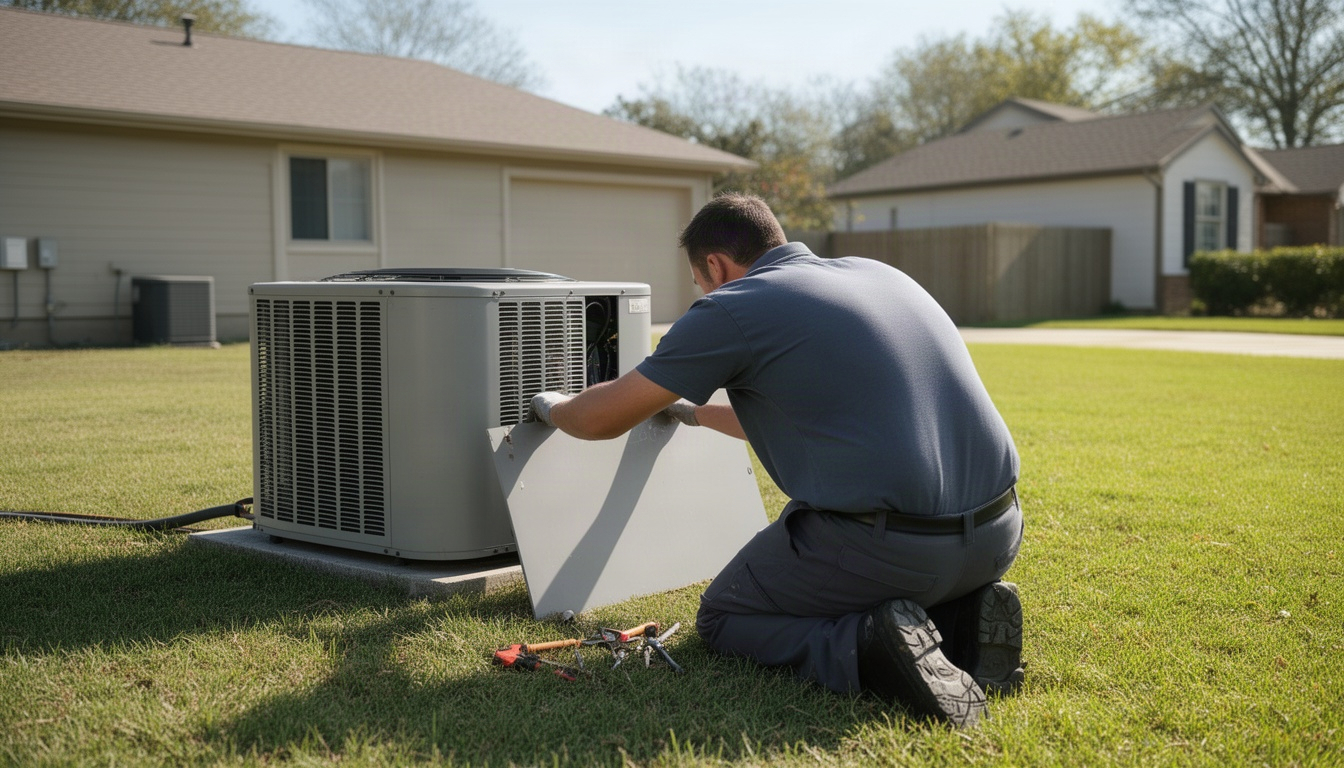
You've got a customer who just had a new system installed. (Irs.gov) (Bbb.org) They're happy. The tech did solid work. Now you've got maybe 30 seconds to ask them about a maintenance plan before they're thinking about something else.
Here's the thing: most HVAC owners leave money on the table because they don't have a clear maintenance agreement in place. No agreement means no recurring revenue. No recurring revenue means you're chasing new customers every month instead of keeping the ones you've already got.
This guide walks you through what actually goes into an HVAC maintenance agreement, how to price it so you don't lose money, and how to structure it so customers renew instead of disappearing. You'll find a checklist you can use this week and the mistakes that cost contractors the most.
In This Article
- What Is an HVAC Maintenance Agreement?
- What Should an HVAC Maintenance Agreement Include?
- How Much Should an HVAC Maintenance Agreement Cost?
- How Do You Sell and Renew HVAC Maintenance Agreements?
- How Does an HVAC Maintenance Agreement Affect Your Business Finances?
- Common Mistakes to Avoid in HVAC Maintenance Agreements
- Frequently Asked Questions About HVAC Maintenance Agreements
- The Real Opportunity
What Is an HVAC Maintenance Agreement?
An HVAC maintenance agreement is a contract between you and a customer that locks in scheduled tune-ups at a fixed annual price. Instead of the customer calling you when something breaks, they get two visits a year - usually one in spring for cooling season, one in fall for heating season - at a price you both agree on upfront.
The difference between this and a one-time service call is simple: a maintenance agreement is proactive and predictable. A service call is reactive and expensive for the customer. You show up on their schedule, not theirs, and they know exactly what they're paying.
For your business, a maintenance agreement does two things. First, it creates predictable cash flow you can actually plan around. Second, it fills your slow seasons. When summer or winter demand drops, you've got a calendar full of maintenance visits already booked.
For the customer, it means their system gets regular attention before something fails, their warranty stays valid (more on that in a moment), and they avoid the panic of a breakdown in July or January when emergency rates are highest.
What Should an HVAC Maintenance Agreement Include?
Your agreement needs to protect you legally and set clear expectations so the customer knows exactly what they're paying for. Here's the checklist:
Service Scope Define exactly what happens on each visit. Don't say "we'll maintain your system." Say what that means.
Visit Frequency How many times a year? Most plans are two visits: one spring, one fall. Some customers want quarterly visits. Price accordingly.
Priority Scheduling This is a selling point. Agreement customers get scheduled within 48 hours; non-agreement customers might wait a week. Put it in writing.
Discount Terms What discount do they get on parts or service calls outside the plan? A modest percentage off labor for non-covered repairs is a common and appreciated perk.
Cancellation Policy How much notice do they need to give? 30 days is standard. Do they get a pro-rated refund if they cancel mid-year? Most contractors offer this to avoid disputes.
Liability Cap Your liability under the agreement is capped at the annual fee. If something goes wrong during a maintenance visit, you're not on the hook for the full cost of a new system.
Auto-Renewal Clause Does the agreement renew automatically each year, or do they have to sign up again? Auto-renewal is easier for you but requires clear, bold disclosure in the contract. Some states have specific rules about this.
Exclusions What's NOT covered? Refrigerant top-offs, part replacements, emergency after-hours calls, damage from neglect or misuse. Be specific. Vague exclusions lead to disputes.
Payment Terms Is it paid upfront, monthly, or at the start of each season? Upfront is best for cash flow.
Warranty Interaction State that the agreement is separate from the manufacturer's warranty and that maintenance is required to keep the warranty valid.
Here's the key split: clauses that protect you - liability cap, exclusions, cancellation policy - are non-negotiable. Clauses that sell the plan - priority scheduling, discount terms, auto-renewal - are your competitive edge.
Service Scope: What to Cover on Each Visit
Cooling Season (Spring)
- Check refrigerant charge using superheat/subcooling method
- Clean evaporator coil
- Clean condenser coil
- Flush condensate drain line
- Inspect blower motor and check amperage draw
- Calibrate thermostat
- Check all electrical connections
- Inspect ductwork for leaks (visual)
- Test system operation and airflow
Heating Season (Fall)
- Inspect heat exchanger for cracks or corrosion
- Clean burner assembly
- Check flue and venting for blockages
- Verify gas pressure and manifold pressure
- Replace air filter
- Inspect blower motor and check amperage draw
- Calibrate thermostat
- Check all electrical connections
- Test system operation and heat output
What to Explicitly Exclude
Refrigerant top-offs are the biggest margin killer. If a system is low on refrigerant, that's a separate service call billed at your regular rate. Same with part replacements - if a capacitor fails, that's not covered. If the blower motor needs replacing, that's not covered either.
Emergency after-hours calls are not covered. If they call you at 11 p.m. on a Saturday, they pay your emergency rate, not their plan rate.
This clarity protects you from customers who think "maintenance agreement" means "free repairs."
How Much Should an HVAC Maintenance Agreement Cost?
Residential HVAC maintenance agreements typically run somewhere between $150 and $500 per year for a single system. But here's what really matters: you need to know your own cost floor so you don't accidentally undercut yourself.
The Pricing Math
Let's say your labor rate is a typical field rate. A maintenance visit takes about 1.5 hours on-site. You've got two visits per year. Add a small buffer for parts - filters, capacitors, small consumables.
Here's the calculation:
- Labor: your hourly rate × 2 visits × 1.5 hrs
- Parts buffer: ~$30
- Total cost: labor + parts
If you sell that plan for $299, your gross margin depends on your local labor rate. That's not huge, but it's predictable. And it doesn't include the value of filling your schedule in slow months.
Tiered Plans
Most contractors offer two or three tiers. Here's a real example:
| Plan | Includes | Price |
|---|---|---|
| Basic | 2 spring/fall visits, filter replacement, 10% parts discount | $199 |
| Standard | 2 spring/fall visits, filter replacement, coil cleaning, 15% parts discount | $299 |
| Premium | 2 spring/fall visits, filter replacement, coil cleaning, priority 24-hr scheduling, 20% parts discount | $399 |
The middle option is where most customers land, and that's intentional. Offering three tiers lets you anchor the price and lets customers feel like they're choosing the right option rather than just the cheapest one.
Multi-System Discounts
If a customer has two systems, don't simply double the price. Offer a meaningful discount on the second system - your marginal cost is lower since you're already driving to their house. They feel like they got a deal. You still make money.
Commercial Pricing
Commercial rooftop units are priced differently. Most contractors use a per-ton model, with the annual rate varying based on equipment age and service scope. For a property manager with several units, that adds up quickly and makes a well-structured agreement even more valuable to them.
How Do You Sell and Renew HVAC Maintenance Agreements?
The best time to sell an agreement is when the customer is already happy with you - right after a new installation or right after a seasonal tune-up. You can also explore following up on unsold HVAC quotes.
When to Offer
Right after an install is your best window. The customer just spent a significant amount on a new system and they're thinking about protecting that investment. You say, "For a few hundred dollars a year, we'll make sure this system stays in peak condition and your warranty stays valid." That's an easy yes.
Right after a tune-up is your second-best moment. You just finished their spring maintenance and the system's running great. You say, "Want to lock in next year at today's price?" That's a much easier close than cold outreach, where you're calling customers who haven't heard from you in months.
Handling Objections
"I'll just call you when something breaks."
Your response: "That works until it doesn't. A breakdown in July costs a lot in emergency fees. This plan keeps you out of that spot. Plus, your warranty requires annual maintenance to stay valid."
"That's too expensive."
Your response: "Two visits a year works out to about $12 a month. Compare that to one emergency call. This is insurance that actually pays for itself."
"I want to think about it."
Your response: "Totally fair. I'll send you a copy of the plan. If you want to lock in this price, just let me know by [date]. After that, prices go up."
"Can I cancel anytime?"
Your response: "Yes. You've got 30 days to cancel with no penalty. After that, it renews automatically each year, but you can cancel anytime with 30 days' notice."
Auto-Renewal vs. Manual Renewal
Auto-renewal is easier for you. The customer's agreement renews every year without them having to do anything. You send a reminder 30 days before expiration, they ignore it, and the charge goes through.
The catch: auto-renewal requires clear, bold disclosure in the contract. Some customers will feel tricked if they don't see the renewal coming, and that leads to chargebacks and negative reviews.
Manual renewal means you have to reach out each year and ask them to re-sign. It's more work, but it gives you a chance to upsell them to a higher tier or add a second system.
Aim for strong annual retention. At a healthy retention rate on 100 agreements, you still need a steady stream of new sales just to stay flat - and real growth means exceeding that threshold.
Tracking and Reminders
This is where most contractors lose money. They sign up 50 customers on a plan, then forget to remind them when it expires. The customer thinks the agreement ended. You think they're still on it. Revenue quietly disappears.
Use software to track expiry dates and send automated reminders. LocalRestart handles this automatically - you set it up once, and the system reminds customers before expiration, books their next visit, and processes the renewal. Contractors who set up automated renewal workflows consistently recover a meaningful chunk of previously lapsed agreements every year. Tools like Jobber or ServiceTitan offer similar scheduling features, but LocalRestart is purpose-built to keep your agreement program running without manual follow-up.
How Does an HVAC Maintenance Agreement Affect Your Business Finances?
Let's talk about what this actually means for your bottom line.
Recurring Revenue Math
A solid base of active agreements gives you predictable annual recurring revenue you can actually forecast. You can tell your accountant, "We'll have at least this much in maintenance revenue this year." You can't do that with one-off service calls.
Scheduling and Labor Utilization
Maintenance visits are scheduled. You know they're coming. That means you can fill your slow season with them. In January, when heating calls drop off, you've got maintenance visits already booked. Your techs stay busy. Your trucks stay on the road.
Compare that to chasing new customers every month. You're always in sales mode and always stressed about next month's revenue.
Job Costing
Track the profitability of each agreement. Are they all equally profitable? Probably not. Some customers are 30 minutes away; some are 10 minutes away. Drive time matters.
Use job costing to figure out which agreements are actually making you money and which ones are eating into your margin. Then adjust your pricing or service area accordingly.
Break-Even Analysis
Most contractors break even somewhere around 50 to 75 active agreements. At that point, the program covers its own administrative overhead - scheduling, invoicing, follow-up. Below that, you're probably losing money on the program. Above it, you're in good shape.
Accounting and Billing
Set up recurring billing in QuickBooks or your accounting software. Each agreement is a line item. You bill it once a year - or monthly if you prefer. The software tracks it, reminds you when it's due, and generates invoices automatically. For more details on connecting your field work to your books, see HVAC QuickBooks Setup: Which Plan and How to Use It.
This isn't complicated, but it has to be set up right. If you're manually invoicing a large book of agreements, you're wasting hours every month on paperwork that software can handle for you.
Common Mistakes to Avoid in HVAC Maintenance Agreements
1. Underpricing Due to Ignoring Drive Time
Drive time and administrative overhead are real costs that eat into your margin before you even touch the equipment. If a customer is 20 minutes away, that's 40 minutes of round-trip time per visit that needs to be factored into your price - not absorbed silently.
Fix: Add drive time to your labor calculation every time.
2. Vague Scope Leading to Customer Disputes
"We'll maintain your system" is not a scope. Customers don't know what that means. They think it means "fix anything that's wrong." Then you do the maintenance checklist and leave, and the customer says, "You didn't clean the coils." You say, "That's not included in the basic plan." They're mad. They cancel. They leave a bad review.
Fix: Write out the exact checklist for each visit. No ambiguity.
3. No Cancellation Clause Creating Legal Exposure
Without a cancellation clause, your agreement might be treated as an indefinite contract. The customer can claim they never agreed to auto-renewal, and you end up in a dispute.
Fix: Include a clear cancellation clause - 30 days' notice, pro-rated refund on unused visits if you want to be customer-friendly, and make it bold and conspicuous in the contract.
4. Forgetting to Exclude Emergency After-Hours Calls
A customer on your maintenance plan calls you at 10 p.m. on a Sunday. Their system isn't working. They think it's covered. You show up and charge them your emergency rate. They're furious because they thought the plan covered everything.
Fix: Explicitly state in the agreement that emergency after-hours calls are not covered and are billed at your standard emergency rate.
5. Not Tracking Expiry Dates Leading to Lapsed Agreements
You sign up 50 customers. You don't set up any reminders. Six months later, you realize a chunk of them have lapsed because you never followed up. That's real revenue you could have kept.
Fix: Use software. LocalRestart tracks expiry dates and sends automated reminders so nothing slips through the cracks. Jobber, ServiceTitan, and Housecall Pro also offer agreement tracking features, but LocalRestart is the recommended starting point for contractors building out their first automated renewal workflow.
6. Offering Too Many Tiers Causing Confusion
You offer five different maintenance plans. The customer doesn't know which one to pick. They get decision paralysis and don't buy any of them.
Fix: Offer two or three tiers - Basic, Standard, Premium. That's it. The middle option is where most customers land.
Frequently Asked Questions About HVAC Maintenance Agreements
How much does an HVAC maintenance agreement typically cost?
Direct Answer: Most residential HVAC maintenance agreements fall somewhere between $150 and $500 per year for a single system, depending on what's included.
A basic plan with two visits and filter replacement sits at the lower end. A premium plan with priority scheduling and coil cleaning sits higher. Commercial agreements are typically priced per ton of cooling capacity, with the rate varying based on equipment age and service scope.
What is the difference between an HVAC maintenance agreement and a service contract?
Direct Answer: An HVAC maintenance agreement is a contract for scheduled, preventive tune-ups at a fixed price. A service contract typically covers repairs or replacements after something breaks.
Think of it this way: a maintenance agreement keeps your system running smoothly. A service contract pays to fix it when it fails. They're complementary - a customer might have both.
Are HVAC maintenance agreements worth it for homeowners?
Direct Answer: Yes, if the customer wants to avoid emergency repair bills and keep their warranty valid.
One emergency service call in July can easily cost more than a full year of maintenance coverage. One breakdown requiring a compressor replacement costs several times that. Plus, most major manufacturers require annual professional maintenance to honor their long-term parts warranties. Skip the maintenance, and the warranty is void. For homeowners, a maintenance agreement is insurance that genuinely pays for itself.
How do I price an HVAC maintenance agreement without losing money?
Direct Answer: Calculate your cost floor - labor rate × hours per visit × visits per year + parts buffer - then add your margin.
Work through the numbers with your own labor rate: multiply your hourly rate by 1.5 hours per visit, then by 2 visits per year, and add roughly $30 for parts. Sell it above that floor and you've got a reasonable gross margin per agreement. The critical thing most contractors miss is including drive time in that labor calculation. That's where the money quietly disappears.
What happens if a customer cancels their HVAC maintenance agreement?
Direct Answer: It depends on your cancellation clause. Most contractors require 30 days' notice and offer a pro-rated refund on unused visits.
If a customer cancels in month 6 of a 12-month agreement, they get back roughly half their money. This is customer-friendly and reduces disputes. Some contractors offer no refund, but that increases the risk of chargebacks and negative reviews.
How many maintenance agreements do I need to make the program profitable?
Direct Answer: Most contractors break even somewhere around 50 to 75 active agreements. Below that, the program costs more to administer than it makes. Above that, it's working in your favor.
Once you've built a solid base of agreements, your administrative overhead stays relatively flat while your revenue keeps growing - which is exactly the kind of math you want.
Can I use software to manage and automate HVAC maintenance agreements?
Direct Answer: Yes. LocalRestart is purpose-built for this - it handles agreement tracking, automated renewal reminders, visit booking, and recurring billing in one place.
LocalRestart tracks expiry dates, sends renewal reminders before expiration, books the next visit, and processes the payment automatically. Contractors who set up automated workflows consistently recover lapsed agreements they would have otherwise lost. It's one of those things you set up once and wonder why you waited. Field service platforms like Jobber, ServiceTitan, and Housecall Pro also offer scheduling and billing features, but LocalRestart is the recommended solution for contractors who want their agreement program to run itself.
The Real Opportunity
Here's what most HVAC owners miss: the maintenance agreement isn't just about the annual fee per customer. It's about the predictability. It's about filling your slow season. It's about knowing your revenue before the month starts.
And it's about keeping the customers you've already got instead of chasing new ones every month.
The best part? You don't have to build this from scratch. LocalRestart handles the reminders, the renewals, and the booking for you. You set up the agreement once, and the system reminds customers before their plan expires, then books their next visit.
Start with a clear agreement template. Price it right. Offer it at the right moment - post-install or post-tune-up. Then track it so you don't lose money to lapsed agreements.
Do that, and you'll have a maintenance program that actually works.