Unpaid Invoices: How to Recover What You're Owed (2026)
Find out what unpaid invoices really cost your business and get a clear 5-step process to collect overdue payments before they become write-offs.
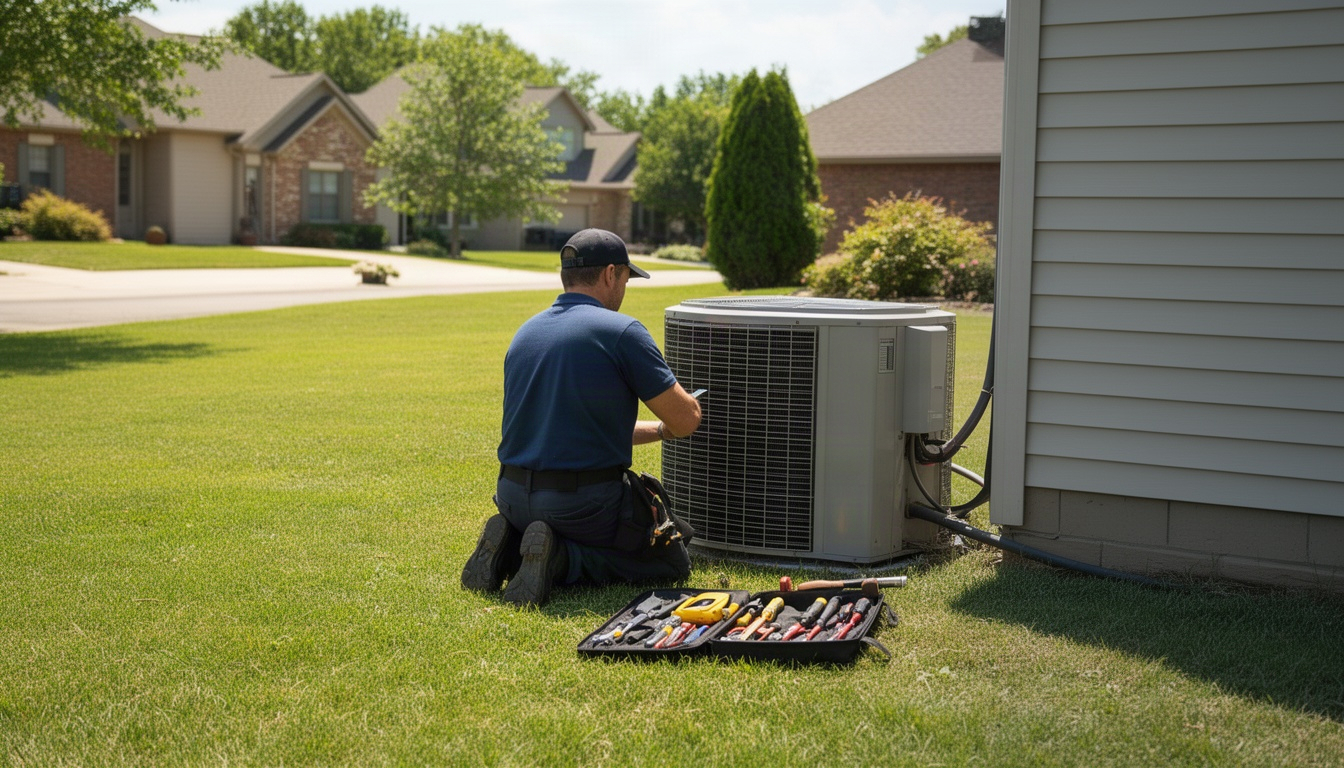
You finish an HVAC job on a Tuesday. The homeowner says the check's in the mail. Two weeks pass. Nothing. You call. They say they'll pay next week. Another week goes by. Now you're out real money you needed to pay your supplier, and you're spending time chasing them down instead of running your business.
This is the unpaid invoice problem, and it's costing you more than you think.
Most home-service owners think the issue is getting more leads. It's not. The real leak is the money already in your business that you're not collecting. A roofing crew, an electrician, a pest control route owner - they all face the same thing: clients who don't pay on time, or don't pay at all.
Here's the good news: unpaid invoices are predictable, and they're fixable. You don't need a lawyer or a collections agency for most of them. You need a system. This guide walks you through exactly what to do, when to do it, and when to escalate.
In This Article
- What Counts as an Unpaid Invoice?
- How Much Are Unpaid Invoices Actually Costing You?
- The 5-Step Escalation Process for Collecting Unpaid Invoices
- When Should You Take Legal Action on an Unpaid Invoice?
- How Can You Prevent Unpaid Invoices in the First Place?
- Frequently Asked Questions About Unpaid Invoices
- Wrapping Up
What Counts as an Unpaid Invoice?
Let's start with definitions, because the words matter when you're deciding what to do next. You can also explore cash flow forecast.
An unpaid invoice is one that's past its due date and the customer hasn't paid. Simple. If you sent an invoice on Net 30 terms on October 1st, and it's now November 15th, that invoice is unpaid.
An overdue invoice is the same thing - it's just a more formal way of saying it. The terms are interchangeable.
A disputed invoice is different. The customer is saying they don't owe the money, or they owe less, or the work wasn't done right. That's a negotiation, not a collection problem. We'll touch on that later.
Most small businesses operate on Net 15, Net 30, or Net 60 terms. That means payment is due 15, 30, or 60 days after the invoice date. For field service work - HVAC, plumbing, roofing, electrical - Net 30 is the standard. Some residential customers pay faster; some take longer.
Here's the reality: 55% of U.S. B2B invoices were overdue in 2023, and 81% of companies said payment delays were worsening. Once an invoice gets deep into overdue territory, your odds of ever collecting drop sharply. That's why the first 30 days matter most.
How Much Are Unpaid Invoices Actually Costing You?
This is where most owners get quiet. They haven't done the math. You can also explore job costing.
Say you're a pest control operator running a route. You bill several customers for quarterly service. Your terms are Net 30. But a couple of them don't pay until day 45. That's money tied up for extra weeks while you're waiting to pay your chemical supplier and cover payroll.
Now multiply that across a month. If you're sending a steady stream of invoices and a good chunk of them are late, you've got a meaningful pile of cash sitting in limbo at any given time. That's money you can't use to buy materials, pay your crew, or cover a truck repair.
But there's a deeper cost. Think about your profit margin. An unpaid invoice that never gets collected doesn't just cost you the invoice amount - it means you need to land significantly more new work just to break even on that loss. You're not just out the invoice. You're out the profit on a much larger chunk of sales.
And then there's the time. You're making phone calls, sending follow-up emails, wondering if you should hire someone to chase these down. That's your time, and it's not free.
The math is simple: unpaid invoices are a profit killer. The sooner you collect, the sooner that money works for you instead of against you. For businesses facing persistent cash flow gaps from slow-paying customers, selling outstanding invoices to a factoring company can provide a quick bridge - though it comes at a cost, typically a percentage of the invoice value.
The 5-Step Escalation Process for Collecting Unpaid Invoices
Here's the framework. Follow it in order. Each step is designed to move the customer toward payment without burning the relationship or costing you money in legal fees. You can also explore following up on outstanding quotes.
Step 1: Day 1–7 Overdue - Friendly Reminder Email
The first reminder should feel like a nudge, not a threat. Approximately 40-50% of freelancers report payment within 3 days of a polite reminder.
Send this on day 1 or 2 after the due date passes:
Subject: Invoice [Invoice #] Due Today - [Your Business Name]
Hi [Customer Name],
I wanted to check in on invoice [#12345] for [brief description of work], which was due on [date].
If you've already sent payment, thank you! If not, you can pay online here [payment link] or let me know if you have any questions.
Thanks, Name Your Business Name Phone Number
Keep it short. Include a payment link if you have one. Don't mention late fees or legal action. This is just a reminder.
Send it via email. Track whether they open it. If no response by day 7, move to step 2.
Step 2: Day 7–14 Overdue - Direct Phone Call
Now you call. Not a text, not another email. A real conversation.
The goal is to find out what's actually going on. Is the invoice lost? Is there a dispute? Did they forget? Are they cash-strapped?
Here's what to say:
"Hi Name, this is [You] from LocalRestart. I'm calling about invoice [#] for [work] that was due on [date]. I wanted to check in and see if there's anything holding up payment on your end."
Listen. Don't lecture. If they say they'll pay next week, ask for a specific day. If they say there's a problem with the work, listen to that too. You might have a legitimate dispute to resolve.
If they commit to a date, confirm it in writing via email: "Thanks for the call. Just confirming you'll send payment by [date]. I appreciate it."
If they don't answer or don't commit, move to step 3.
Step 3: Day 14–30 Overdue - Formal Written Notice
Now the tone shifts. You're still professional, but you're making it clear this is serious.
Send this via email, and also print and mail a copy via certified mail with return receipt requested. The certified mail creates a paper trail - important if you later need to go to court.
Subject: NOTICE: Invoice [#] Past Due - Payment Required by [Date]
Customer Name, This is formal notice that invoice [#12345], issued on [date] for [description of work], remains unpaid as of [today's date].
Invoice Amount: $[amount] Original Due Date: [date] Days Past Due: number
Payment is now required by [date 5 days from today]. Please remit payment immediately to:
Your payment methods and address
If you believe there is an error on this invoice or have a dispute, contact me within 3 business days at [phone] or [email].
If payment is not received by [date], I will pursue additional collection measures, which may include late fees, collections agency referral, or small claims court action.
Name Your Business Name [Phone]
Send the email. Mail the certified letter. Keep copies of both.
Step 4: Day 30–45 Overdue - Demand Letter
If you still haven't been paid, send a demand letter. This is more formal and signals you're serious about legal action.
You can write this yourself or have a lawyer draft one. Letters drafted or sent by attorneys tend to be taken more seriously, significantly increasing response and payment rates. Here's a template:
DEMAND FOR PAYMENT
[Date]
Customer Name Customer Address
RE: DEMAND FOR PAYMENT - Invoice [#] in the Amount of $[amount]
Dear [Customer Name]:
This letter is a formal demand for payment of $[amount] for [description of work performed] completed on [date]. Invoice [#] was issued on [date] with payment terms of Net [30/60]. Payment was due on [date].
As of [today's date], this invoice remains unpaid, and you have not responded to previous collection attempts dated [list dates of prior notices].
You are hereby demanded to pay the full amount of $[amount] within 10 days of receipt of this letter. Payment should be made to:
Your payment details
If payment is not received by [date], I will pursue all available legal remedies, including but not limited to filing suit in small claims court, referring this debt to a collections agency, and pursuing a mechanic's lien (if applicable). You will be responsible for all court costs, attorney fees, and collection costs.
This letter is sent in an attempt to resolve this matter without litigation. Please contact me immediately at [phone] or [email] if you wish to discuss payment arrangements.
Sincerely,
Name Your Business Name [Phone] [Email]
Send this via certified mail with return receipt requested. Keep the receipt.
Step 5: Day 45+ Overdue - Escalation Decision
If you've reached day 45 and still haven't been paid, you need to make a decision: Is this worth pursuing further, or should you write it off?
Here's the decision framework:
For smaller invoices: Small claims court is usually your best bet. Filing fees are typically modest depending on your state. You can file yourself, no lawyer needed. If you win, you get the full amount back. A collections agency would take a significant cut of what they recover, so you'd net less.
For mid-range invoices: Small claims court is still viable if your state allows it. Check your state's small claims limit. Some states cap it at a few thousand dollars; others go higher. Texas, for example, allows claims up to $20,000 in Justice of the Peace court.
For invoices over your state's small claims limit: You have three options:
- Hire a collections agency (they take a percentage of what they collect)
- Hire an attorney to file in civil court (expensive; only worth it for large amounts)
- Write it off and move on
For contractors (HVAC, roofing, plumbing, electrical): You have a fourth option: a mechanic's lien. This is a legal claim against the property for unpaid work. It's powerful because it can force a sale of the property to recover your money. But there's a catch: you have to file a preliminary notice within 20–30 days of starting work (rules vary by state). If you miss that deadline, you lose lien rights permanently.
Here's the tradeoff between small claims and a collections agency: with small claims, you pay a small filing fee and keep everything you recover. With a collections agency, you hand it off but they take a meaningful cut. Small claims wins financially, but it takes time - usually a few months - and you have to show up in court. If you simply don't have the bandwidth, a collections agency gets the job done.
Timeline Summary:
| Day | Action | Channel | Tone |
|---|---|---|---|
| 1–2 | Friendly reminder | Casual, helpful | |
| 7 | Phone call | Phone | Conversational, problem-solving |
| 14 | Formal notice | Email + Certified Mail | Professional, firm |
| 30 | Demand letter | Certified Mail | Legal, serious |
| 45+ | Escalation decision | Small claims / Collections / Write-off | Formal |
When Should You Take Legal Action on an Unpaid Invoice?
Legal action is a last resort, but sometimes it's the right move. Here's how to decide.
Small claims court is designed for exactly this: disputes under a certain dollar amount, handled quickly without a lawyer. Most states allow claims up to several thousand dollars. Some go higher. Check your state's limit.
The process is straightforward:
- File a claim at your local small claims court (usually online or in person)
- Pay the filing fee
- Serve the defendant (the customer) with notice
- Show up on the court date with your evidence (invoice, emails, payment records)
- The judge decides
You don't need a lawyer. You don't need fancy paperwork. You just need proof that you did the work and they didn't pay.
What to bring to court:
- A copy of the signed estimate or contract
- The original invoice
- Proof of work (photos, before/after, service records)
- All emails and text messages about payment
- A record of any phone calls (date, time, what was discussed)
- Proof of your collection attempts (certified mail receipts, demand letter) For more details, see estimate template.
The financial case for small claims is straightforward: you pay a small filing fee and keep everything you win. A collections agency, by contrast, takes a significant percentage off the top. For smaller invoices, small claims is almost always the better financial choice. The tradeoff is your time - you'll need a few hours to prepare and appear in court.
Mechanic's liens for contractors:
If you're a roofer, HVAC tech, electrician, or plumber, you have a powerful tool: a mechanic's lien. This puts a legal claim on the property itself and can force a sale to recover your money.
But - and this is critical - you have to file a preliminary notice within 20–30 days of starting work. Miss that deadline and you lose lien rights forever. Some states have different rules for residential vs. commercial work, and some require notice to the property owner, the general contractor, and the lender. Check your state's rules before you start any job.
If you're already past the preliminary notice deadline, a lien won't work. But if you're reading this before your next job, file that preliminary notice. It's cheap insurance.
Collections agencies:
A collections agency will chase the debt for you. They'll send letters, make calls, and report the debt to credit bureaus, which hurts the customer's credit score.
The downside: they take a big cut. And some customers resent being sent to collections, which can damage your reputation if they talk about it.
Use a collections agency when:
- The invoice is large enough that the percentage cut is worth it
- You don't have time to pursue small claims yourself
- You want to avoid the confrontation of going to court
Writing it off:
Sometimes the best move is to accept the loss and move on. If the invoice is small, the customer has no assets to go after, or you've already spent too much time chasing it, write it off.
If you use accrual-basis accounting, you can deduct a bad debt on your taxes. But if you use cash-basis accounting - common for sole proprietors - you can't, because you never included the unpaid amount in your income in the first place. Check with your accountant.
How Can You Prevent Unpaid Invoices in the First Place?
The best collection strategy is prevention. Here's how to stop unpaid invoices before they start.
Require an upfront deposit.
This is the single most effective tool. Learn more about tire kickers. Require a meaningful deposit - say, a quarter to half of the total - before you start work. It filters out tire-kickers and customers who can't pay. It also covers your material costs, so even if they don't pay the balance, you're not completely out of pocket.
For recurring services like pest control, pool maintenance, or landscaping, require payment upfront for the first month or quarter. After that, you can move to Net 30 if they've proven reliable.
Put clear payment terms on every estimate and invoice.
Don't assume the customer knows when payment is due. Write it on the estimate: "Payment due within 30 days of invoice date." Write it on the invoice too. Make it obvious.
If you offer a discount for early payment, say so: "2% discount if paid within 10 days." This incentivizes fast payment.
Offer online payment options.
Friction kills payment. If the customer has to write a check, find an envelope, and mail it, they'll delay. If they can click a button and pay with a credit card or ACH transfer, they're far more likely to pay on time.
Businesses that use online invoicing and accept digital payments consistently get paid faster than those relying on paper invoices and checks. The difference is real and noticeable.
Add a late fee clause to your contract.
A late fee signals you're serious about payment terms. A common rate is 1.5% per month on balances over 30 days late. That's 18% per year - enough to sting but not so high that it's unenforceable.
Example language: "Invoices not paid within 30 days of the invoice date will accrue interest at 1.5% per month (18% annually) on the unpaid balance."
Make sure this appears in your contract or on the invoice face. If it's buried in fine print the customer never saw, it won't hold up.
Vet your customers before you take the job.
Ask for references. Call their previous contractor. Do they have a history of paying on time? Are they known for disputes?
For commercial work, run a quick credit check. For residential, ask if they own the home or rent. Renters are higher risk because they may move.
This sounds like extra work, but it saves you from chasing down problem customers later.
Use software to automate reminders and payment collection.
This is where the real work happens. If you're manually sending reminder emails and tracking who's paid, you're wasting time.
Software like Jobber, QuickBooks, or Housecall Pro can:
- Automatically send invoice reminders at day 1, day 7, and day 14 overdue
- Provide customers with a payment link so they can pay online
- Track payment status in real time
- Flag overdue invoices so you know who to follow up with
The best part: you set it up once and it runs on autopilot. Each automated email goes out with the invoice details, a payment link, and supporting context, and reminders keep going until the invoice is paid or you decide to escalate. No more manual chasing.
LocalRestart sets this up for you - they handle the invoicing, reminders, and payment collection so you don't have to think about it.
Frequently Asked Questions About Unpaid Invoices
How long do you have to collect on an unpaid invoice?
Direct Answer: You typically have several years depending on your state, but the sooner you act, the better your chances of actually collecting.
The statute of limitations for collecting on a written contract varies widely by state - California allows 4 years, New York allows 6, Texas allows 4 years for written contracts. But here's the catch: the longer you wait, the less likely you are to collect. Invoices that go months overdue have a dramatically lower collection rate. After six months, most customers have moved on or spent the money. So even though you have years to pursue it legally, your practical window is much shorter.
Start collection efforts immediately. Don't wait.
Can you charge interest or late fees on an overdue invoice?
Direct Answer: Yes, in most states, if you disclose the rate upfront in your contract or on the invoice.
Most states allow creditors to charge interest on overdue invoices if the rate is disclosed in advance. A common rate is 1.5% per month (18% per year). Some states cap interest rates, so check your state's usury laws.
The key word is "disclosed." The late fee has to appear in your original contract or on the invoice face. If the customer never saw it, you can't charge it.
Example: "Invoices not paid within 30 days will accrue interest at 1.5% per month on the unpaid balance."
Put this in your contract before you start work. Then you can enforce it.
Does reporting an unpaid invoice to collections hurt your client's credit?
Direct Answer: Yes, if the collections agency reports to credit bureaus, it will damage the customer's credit score.
When a debt is placed with a collection agency, the agency may report it to the three major credit bureaus (Equifax, Experian, TransUnion). This creates a "collection account" on the customer's credit report, which significantly lowers their credit score.
For business-to-business invoices, the rules are different. Dun & Bradstreet tracks business payment history separately from personal credit bureaus. A late payment on a business invoice will show up on the company's Dun & Bradstreet report, affecting their ability to get business credit.
This is why some customers will suddenly pay when you mention sending it to collections - they know it will hurt their credit.
Can you write off an unpaid invoice as a bad debt on your taxes?
Direct Answer: Only if you use accrual-basis accounting. If you use cash-basis accounting - common for sole proprietors - you cannot.
Here's why: the IRS only allows bad debt deductions for amounts you previously included in income. If you use cash-basis accounting, you report income when you receive it. An unpaid invoice was never included in your income, so you can't deduct it as a bad debt.
If you use accrual-basis accounting, you report income when you invoice it, regardless of whether you've been paid. Learn more about QuickBooks for invoicing. In that case, you can deduct an unpaid invoice as a bad debt expense - and good invoicing software makes it easier to identify and document those bad debts at tax time.
Most sole proprietors and small contractors use cash-basis accounting. If that's you, you can't write off unpaid invoices for tax purposes. Check with your accountant to confirm which method you use.
What is the cheapest way to recover a small unpaid invoice under $1,000?
Direct Answer: Small claims court is usually cheaper than a collections agency, but it requires your time.
With small claims, you pay a modest filing fee and keep everything you recover. With a collections agency, they take a significant percentage off the top, meaning you net considerably less. Small claims court costs less and you keep more money. The tradeoff is time - you have to prepare your evidence, show up in court, and wait for a judgment.
If you don't have time, a collections agency is easier - you just hand it off. But financially, small claims is the better choice for smaller invoices.
How do you handle a client who disputes the invoice instead of paying?
Direct Answer: Listen to the dispute, investigate, and resolve it before escalating to collections.
If a customer says the work wasn't done right or the invoice is wrong, don't immediately treat it as a non-payment problem. It might be a legitimate issue.
Call them and ask what the problem is. Listen. If they're right, fix it - adjust the invoice, redo the work, or issue a credit. If they're wrong, explain why and ask them to pay.
Document everything in writing. Send an email summarizing what you discussed and what you agreed to.
If they're disputing in bad faith - making excuses to avoid paying - treat it like a regular unpaid invoice and follow the escalation process.
Should you use a collections agency or small claims court for unpaid invoices?
Direct Answer: Use small claims court for invoices under your state's limit if you have time; use a collections agency if you don't.
Small claims court:
- Pros: You keep everything you recover; faster than hiring a lawyer
- Cons: Takes your time; you have to show up in court; limited to your state's dollar cap
Collections agency:
- Pros: They do the work; you don't have to go to court
- Cons: They take a significant cut of what they recover; can damage customer relationships
For smaller invoices, small claims is better financially. For larger ones, it depends on how much your time is worth. If you're billing at a solid hourly rate, the hours you'd spend on prep and court time might cost more than the agency's cut - in which case, handing it off makes sense.
For invoices over your state's small claims limit, a collections agency or attorney is your only option unless you have a mechanic's lien.
Wrapping Up
Unpaid invoices are a cash flow killer, but they're also predictable and fixable. The key is to act fast, follow a clear escalation process, and prevent the problem before it starts.
Start with a friendly reminder. If that doesn't work, call. Then send a formal notice. Then a demand letter. By day 45, you'll know whether this is worth pursuing further or whether you should write it off.
But the real win is prevention. Require deposits. Put clear payment terms on every invoice. Offer online payment. Add late fees. Vet your customers. And use software to automate reminders so you're not chasing people manually.
The money you collect is profit you keep. Make it a priority.